Artificial Intelligence, Drone Swarms, and the Transformation of Military Power
European Institute for Peace and Governance (EIPG)
Artificial intelligence is rapidly transforming the structure of modern warfare. Autonomous systems, drone swarms, and algorithm-driven decision-making tools are increasingly integrated into military operations across air, land, sea, cyber, and space domains. This transformation is reshaping strategic competition between major powers and redefining the balance between offensive and defensive capabilities.
This study examines the rise of AI-enabled warfare and its implications for global security. Drawing on recent conflicts and technological developments, the research analyzes how autonomous systems are altering military doctrines, accelerating battlefield decision-making, and creating new risks for escalation and instability.
The study argues that artificial intelligence is not merely an incremental technological improvement but a structural transformation comparable to previous military revolutions such as nuclear weapons or precision-guided munitions. The rapid proliferation of autonomous weapons systems may lower the threshold for armed conflict while increasing the speed at which wars unfold.
Technological revolutions have always shaped the evolution of warfare. From the invention of gunpowder to the development of nuclear weapons, new technologies have repeatedly transformed the nature of military conflict. Today, artificial intelligence represents the latest and perhaps most consequential of these transformations.
AI-enabled systems can process massive amounts of data, recognize patterns in real time, and coordinate complex operations across multiple platforms. These capabilities allow militaries to operate at speeds and scales that were previously impossible.
According to the U.S. National Security Commission on Artificial Intelligence, artificial intelligence will become a “core component of future military power” and will likely shape the geopolitical balance of the twenty-first century (NSCAI Report, 2021).
The implications of this technological shift extend far beyond the battlefield. AI-driven warfare has the potential to alter global power structures, reshape military alliances, and raise fundamental questions about ethics, law, and accountability.
Methodology
This study draws on multiple sources including academic literature, defense policy reports, military technology analyses, and documented case studies from recent conflicts. The research also examines publicly available data on drone proliferation, autonomous weapons development, and defense spending related to artificial intelligence.
The analysis focuses on three key dimensions:
- The technological foundations of AI warfare
- The strategic implications of autonomous systems
- The geopolitical consequences of an emerging AI arms race
This multi-dimensional approach allows for a comprehensive examination of how AI is transforming global security.
The Technological Foundations of AI Warfare
Artificial intelligence in military systems relies on several core technologies. Machine learning algorithms allow systems to analyze large datasets and detect patterns that may indicate potential threats. Computer vision enables machines to interpret visual information from cameras and sensors, allowing autonomous platforms to identify targets.
Another critical component is sensor fusion. Modern military systems collect information from satellites, radar systems, surveillance drones, and electronic intelligence networks. AI algorithms can integrate these data streams into a coherent operational picture.
According to the Center for Strategic and International Studies (CSIS), AI-enabled systems will allow militaries to process battlefield data at speeds far beyond human capabilities (CSIS Emerging Technology Report, 2023).
These technologies form the backbone of the emerging autonomous battlefield.
Drone Swarms and Autonomous Systems
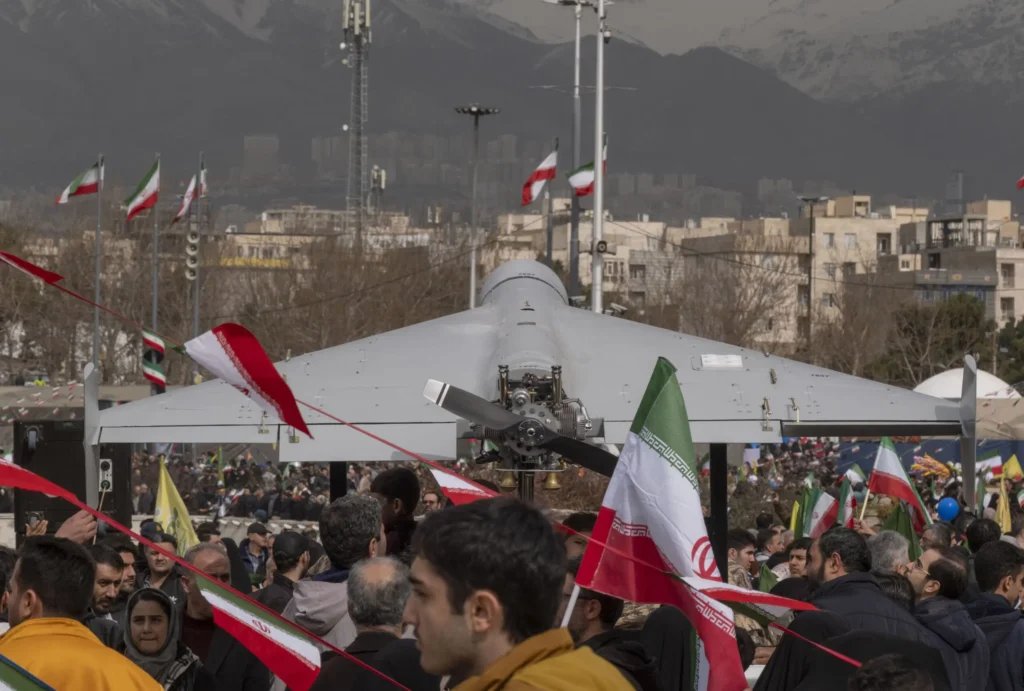
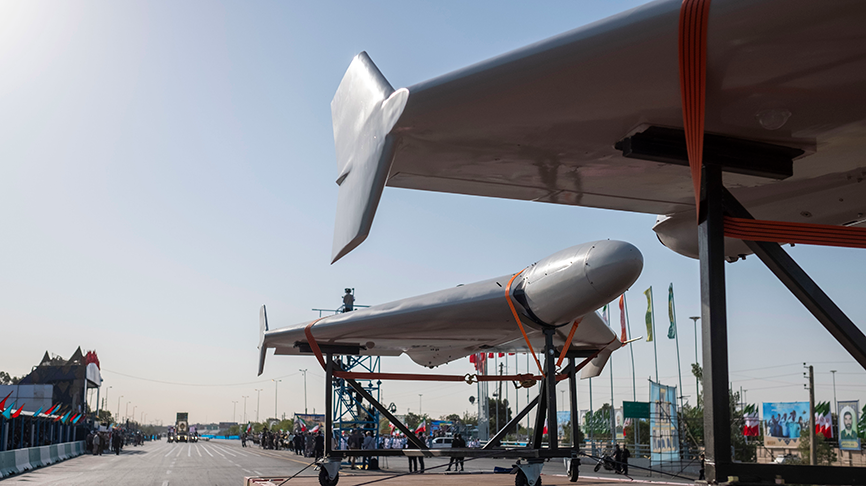
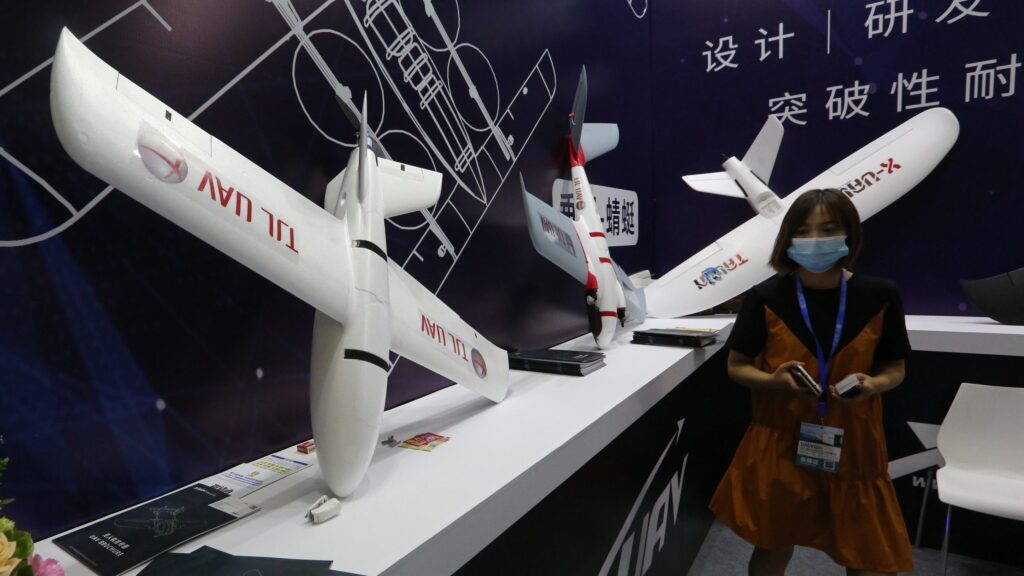
One of the most visible manifestations of AI warfare is the development of drone swarms. Instead of deploying a single aircraft or missile, military planners can launch large numbers of autonomous drones that coordinate their movements and attacks.
Drone swarms operate through distributed algorithms that allow individual units to communicate with one another. This coordination enables the swarm to adapt dynamically to changing conditions.
Researchers at RAND Corporation have warned that swarm technologies could overwhelm traditional air defense systems designed to intercept a limited number of incoming threats (RAND Autonomous Systems Study, 2022).
In such scenarios, defending against hundreds of coordinated drones may require entirely new defensive technologies.
Strategic Implications
The rise of AI warfare has profound strategic implications. Autonomous systems can operate faster than human decision-makers, allowing militaries to respond to threats within seconds. This acceleration of the battlefield decision cycle could significantly alter the nature of military competition.
Another key implication is the reduction of risk for attacking forces. Autonomous systems allow states to conduct military operations without risking pilots or soldiers. This capability may lower the political and psychological barriers to initiating conflict.
At the same time, autonomous systems create new vulnerabilities. AI-driven platforms may be susceptible to cyber attacks, electronic interference, or manipulation through adversarial data inputs.
These vulnerabilities could introduce new forms of strategic instability.
The Global AI Arms Race
The development of AI-enabled weapons has triggered intense competition among major powers. The United States, China, Russia, and several European countries are investing heavily in artificial intelligence for defense applications.
China’s military modernization strategy emphasizes what Chinese defense planners describe as “intelligentized warfare.” This concept involves integrating AI technologies into command systems, weapons platforms, and logistics networks.
Russia has also prioritized autonomous weapons systems. Russian military research programs focus on robotic ground vehicles, autonomous naval platforms, and AI-driven missile guidance systems.
This competition has led some analysts to warn that the world may be entering a new technological arms race.
According to SIPRI, global military spending on emerging technologies—including AI and autonomous systems—has increased significantly in recent years.
Ethical and Legal Challenges
The development of autonomous weapons raises serious ethical and legal concerns. International humanitarian law requires combatants to distinguish between military targets and civilians. Critics argue that autonomous systems may struggle to make such complex judgments in chaotic battlefield environments.
Human rights organizations have called for international restrictions on fully autonomous weapons. The Campaign to Stop Killer Robots, supported by multiple NGOs, argues that delegating lethal decision-making to machines would undermine fundamental ethical principles.
The United Nations has hosted multiple discussions on the regulation of lethal autonomous weapons systems. However, international consensus on binding regulations has not yet been achieved.
Policy Implications
The emergence of AI warfare requires new policy responses at both national and international levels.
Governments must invest in defensive technologies capable of countering autonomous systems, including electronic warfare, cyber defenses, and AI-based detection tools.
International institutions may also need to develop new legal frameworks governing the use of autonomous weapons. These frameworks should address issues such as accountability, transparency, and the requirement for meaningful human control over lethal systems.
Without such frameworks, the rapid proliferation of AI-enabled weapons could destabilize international security.
Conclusion
Artificial intelligence represents one of the most significant technological revolutions in the history of warfare. Autonomous systems, drone swarms, and AI-driven command networks are reshaping military strategy and accelerating the pace of conflict.
The coming autonomous battlefield will likely be defined by machines capable of coordinating complex operations at speeds far beyond human decision-making.
While these technologies offer strategic advantages, they also introduce new risks related to escalation, accountability, and global stability.
Managing these risks will require careful policy planning, international cooperation, and a renewed commitment to ethical governance in military technology.
The future of warfare may ultimately depend on how governments balance the pursuit of technological superiority with the need to maintain global security.