The support of Elon Musk for Alternative for Germany will be investigated by the Bundestag as a potential illegal party donation at the request of Lobby Control, a pro-transparency NGO. Under German law, campaigning by third parties is considered a party donation. The British media also reports that Mr. Musk is considering donating to Reform UK, Neil Farage’s party as much as $100 million. Britain’s rules on political donations would need to be amended to prevent that, and fast.
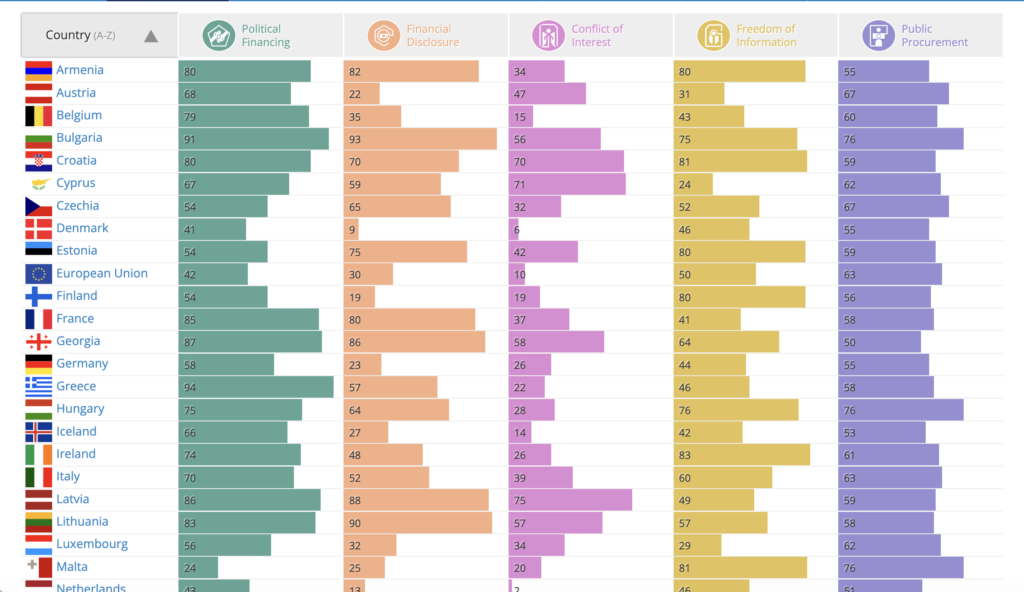
Social media campaigning pushes the regulation of political campaigns to its limits. Even the thickest regulation in the European Union pre-dates the tools that social media abound in these days: virtual currencies, captured crowdfunding, transfers of likes or simply preferential treatment by design. Unlike Germany and even Britain, Romania is very well equipped with regulations (see map). Billionaire Ioan Niculae went to jail in 2015 for 2.6 years for an in-kind undisclosed contribution of about one million USD to campaign research for a presidential candidate. Paying directly the expenses of the candidates by third parties is the most frequently used attempt to avoid the law, although in-kind contributions should also be declared and stay under the allowed ceiling for contributions. The recent winner of a first – now canceled- round of presidential elections in Romania, Calin Georgescu, flooded social media with edited video clips and has a TV station (owned by a man convicted for tax fraud) that has dedicated entire weeks of programming to his promotion, yet he filled in zero campaign expenses. Tiktok, in particular, is a medium where people organize donation campaigns for humanitarian causes, and then the money gets quietly transferred for de facto political promotion.
Preferential treatment by media is not new, although less common in the EU than US and frequently forbidden in the European Union audio-visual media. Campaign financing is a different story. Germany has always had rather loose regulation, UK does somewhat better, as you can see in the Europam.eu map of party funding regulation attached, but a general regulatory upgrade seems to be needed to prevent donations using the new tool of our age: hidden promotion on social media. While pressure mounts on the EU to use its new Digital Act against Elon Musk (good luck with that), the power lies with the countries, current or former member states, they should ban any in-kind or ‘virtual’ donations from social media and penalize drastically such acts- up to the elimination of candidates or parties that use them. Nothing short of the drastic elimination of cheaters would preserve electoral integrity, dramatically tested in these days of experimental warfare against liberal democracy.
www.europam.eu