To defend against Iranian UAVs, the Gulf Cooperation Council states have a range of ground-, air- and sea-launched options, each with its own set of considerations.
Since the beginning of the current war in Iran on 28 February, the Arab Gulf states have used hundreds of missile interceptors to counter Iranian missiles and one-way attack uninhabited aerial vehicles (OWA UAVs). They have already consumed a significant portion of their stockpiles of long-range interceptors. These air-defence systems have protected the Arab Gulf states while the United States and Israel prioritised the destruction of Iran’s ballistic-missile launchers and effectively eliminated most of Iran’s launch capabilities, which led to a sharp drop in the rate of Iranian ballistic-missile fire after the first few days of hostilities.
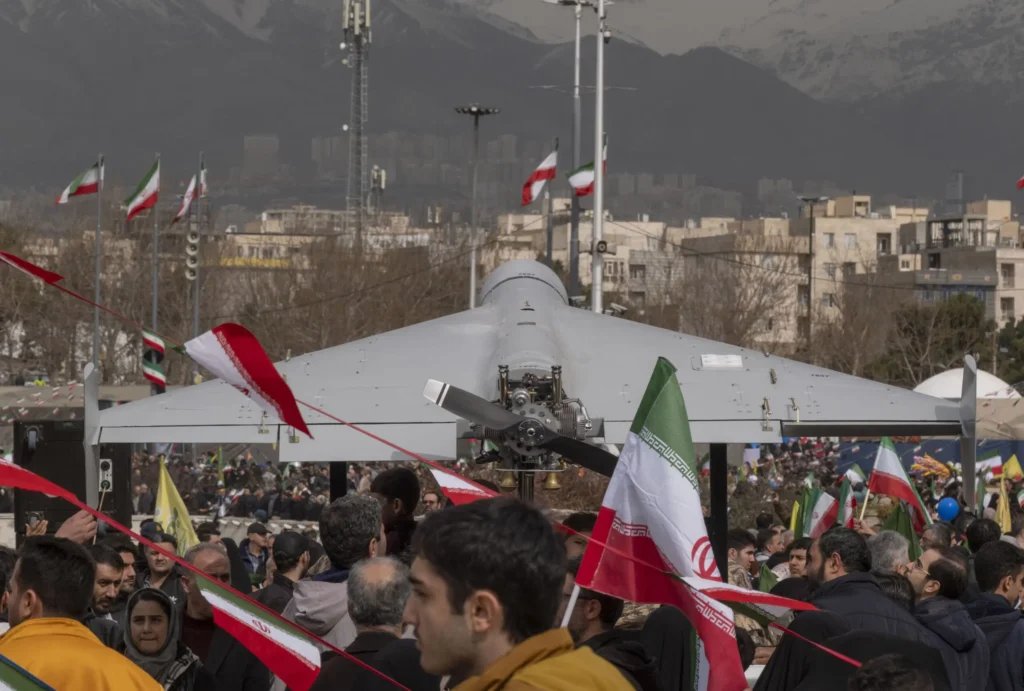
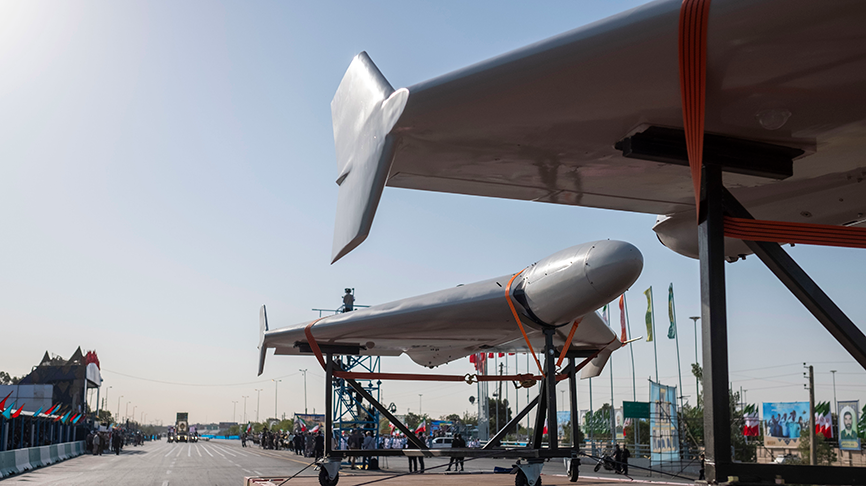
Though Iran’s UAV attacks have also decreased in intensity, drones continue to enter the skies of the Gulf Cooperation Council (GCC) states by the dozen. Compared with ballistic missiles, these are cheaper systems and easier to launch, and Iran possesses a much larger stockpile of them. In the absence of a durable diplomatic settlement to the conflict – which is unlikely, at least in the short term – Iran is likely to rely on UAVs as a major part of its harassment strategy.
For the Arab Gulf states, long-range missile defence was never intended to be the primary means for dealing with UAVs. Although the media focus has been on their Patriot and THAAD air-defence systems since the start of the conflict, the GCC states have a range of options for countering Iranian UAVs, each of which comes with its own set of considerations.
Specifically, these countries field a range of ground-based short- and medium-range surface-to-air missile (SAM) systems that can be employed against UAVs if needed (see Table 1). These are at the higher end of the cost curve but provide much-needed magazine depth. The United Arab Emirates (UAE), for instance, fields batteries of two different Israeli and one South Korean medium-range SAM systems, while Saudi Arabia operates hundreds of short-range air defences (SHORADs), including the M1097 Avenger, RapidRanger, Crotale and Shahine.
Air-defence artillery, which is fielded by all six GCC states, is a low-cost alternative that is particularly effective at handling saturation attacks of low-flying UAVs. These systems tend to have very limited ranges and cannot be used in densely populated areas due to the risk of collateral damage, which restricts their deployment to isolated locations such as in the desert or on the coast looking out to sea.
Mobile fire teams further expand the menu of options. These have proven effective in Ukraine’s war against Russia, particularly when the defending forces can determine the route patterns of the enemy’s UAVs and preposition their teams accordingly. The teams’ weaponry may consist of a vehicle-mounted small-calibre gun, potentially accompanied by man-portable air-defence systems (MANPADS) with proximity fuses, which can be found in the arsenals of most GCC states. Using guns is a low-cost option but requires specialised training. Meanwhile, employing laser-guided and Command Line-of-Sight MANPADS also requires highly trained operators, while infrared MANPADS can pose a threat to friendly forces.

In the air, the GCC states field at least a combined 168 attack helicopters and 734 combat aircraft, which are generally equipped with cannons. The UAE, for instance, has released videos of an Apache helicopter gunning down Shaheds. The GCC states also possess hundreds of transport and multirole helicopters that could mount machine guns from their doors and therefore become counter-UAV assets, although transport helicopters may have to rely on visual identification instead of radar. These missions are generally more effective when undertaken by slower aircraft and helicopters that can travel at speeds similar to those of the Shaheds and take their time to intercept them. This is a cost-effective option, and the ammunition involved is readily available to all GCC states in almost unlimited quantities. The downside is the high likelihood of collateral damage when engagements take place above populated areas, so again the ideal location would be over desert or sea. The close-quarters nature of these engagements also means that debris from destroyed UAVs poses a risk to helicopter and aircraft crews. This may, for example, have caused the loss of combat aircraft in Ukraine.
US attack helicopters have already demonstrated a counter-UAV capability using AGM-114 Hellfire missiles, which are in service with Kuwait, Qatar, Saudi Arabia and the UAE. These missiles are not very manoeuvrable, and their warheads have not yet been optimised for UAVs, but they at least provide additional magazine depth. They are also cheaper than traditional air-to-air missiles (AAMs).
Finally, these countries have thousands of AAMs in their arsenals (see Table 1). Ukraine and Israel have been using AAMs to down Shaheds for years. In the Arabian Peninsula, Saudi Arabia has in the past used AAMs to defend against Ansarullah (Houthi) UAVs, and UAE aircraft have recently done the same to counter Iranian Shaheds during the current conflict. However, AAMs are expensive and not all variants work equally well. The AIM-120 – more than 1,600 of which appear in US Defense Security Cooperation Agency-notified purchases by the Arab Gulf states – can be used, but getting a radar lock on a Shahed might be a challenge. They are also among the most expensive AAMs and generally have a low probability of kill when fired from a distance of less than five kilometres. AIM-9s are more affordable, and the AIM-9X variant – of which the US has sold at least 840 (probably more) to the Arab Gulf states – is regarded as a capable counter-UAV weapon. In service with the air forces of Oman, Qatar, Saudi Arabia and the UAE, the AIM-9X is more effective thanks to its lock-on after launch (LOAL) capability, more advanced seeker, and much better manoeuvrability due to thrust vectoring. With all AAMs, environment matters: a cold background, like the sea, makes a target with a relatively low heat signature, like a Shahed, stand out more.
As for the GCC states’ navies, all except Kuwait’s have vessels with SAM capabilities (see Table 1), and Qatar, for example, has used them to intercept Iranian UAVs since the start of the war. While generally very expensive – costing from several hundred thousand to a few million US dollars – sea-based SAMs provide additional magazine depth and an alternative when other options may not be available. The UAE has 17 vessels with SAM capability, followed by Saudi Arabia (12, though nine of them operate in the Red Sea), Qatar (ten), Oman (five) and Bahrain (one).
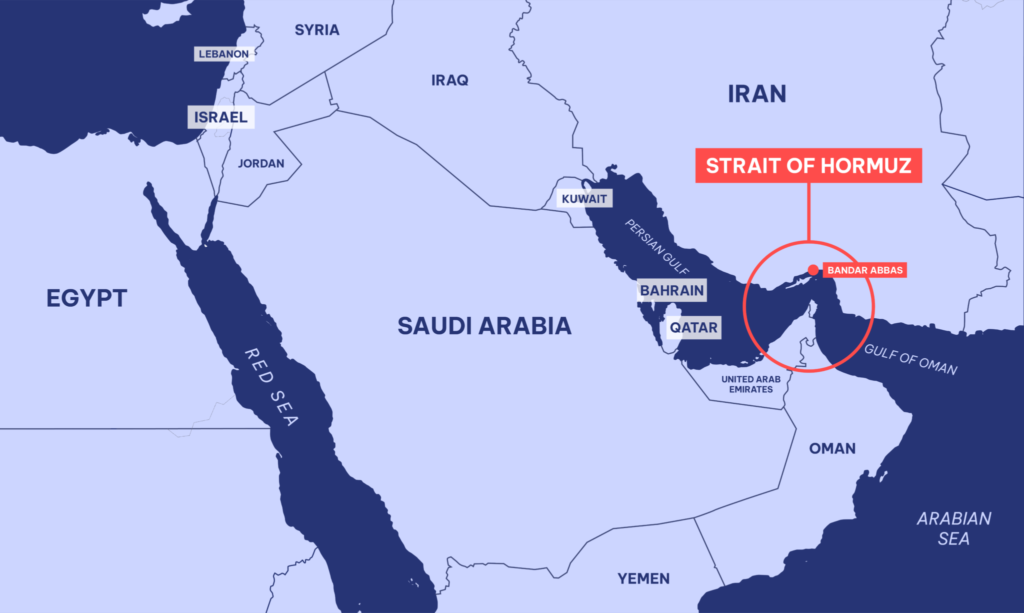
None of the above weaponry is very useful without the right sensors and training, with the latter especially crucial for close engagements from helicopters. More broadly, deconfliction between ground-based and airborne assets will be required if the weaponry is to be used effectively, as will certain changes to doctrine and procedures so as to take into account the Arab Gulf states’ geography (with the exception of Saudi Arabia they have little strategic depth, so early interceptions over the sea are lower risk) and critical-infrastructure vulnerabilities. Also, high-tempo defensive operations inevitably create sustainment challenges that will need to be addressed.
Help from partners
The Arab Gulf states have also reached out to a range of partners who are now providing military assistance (see Table 2). This includes combat aircraft, airborne early-warning and control (AEW&C) aircraft, AAMs, air-defence batteries, additional missile interceptors, UAV interceptors and counter-UAV specialists. Some of these deliveries are very recent or ongoing at the time of writing, so there are not yet many data points on which to base an assessment of their effectiveness. Additional interceptors will provide much-needed munitions, while French and British aircraft have already intercepted Iranian UAVs targeting Bahrain, Qatar and the UAE.

In addition to the above, the US has a range of air-defence systems – including THAAD and Patriot – and aircraft to defend its bases across the Arabian Peninsula, and help defend their host countries, against Iranian missiles and UAVs.
Shopping abroad for air-defence capabilities
The Arab Gulf states have invested significantly in air defence during the last decade, with Table 3 showing a selection of ongoing procurements that will become available for use in the near future. Much of the equipment in the ‘signed’ category will begin to be delivered in 2027–28, and the current war will probably push the Arab Gulf states to further ramp up their acquisitions of air-defence systems and interceptors.
Likely candidates for upcoming acquisitions are THAAD for Qatar and FS-LIDS for the UAE. Qatar, Saudi Arabia and the UAE are reportedly in touch with the Ukrainian government or defence companies for the acquisition of counter-UAV interceptors, which have proven to be a very low-cost, easily scalable and rapidly deployable option in Ukraine. Deploying them at sea from uninhabited surface vehicles would be an attractive option for the Arab Gulf states. Their downside is the specialised training needed to operate them effectively, their comparatively short range and their lesser effectiveness against swarms.

Another very cost-effective and already-tested option is the Advanced Precision Kill Weapon System (APKWS) laser-guidance kit for 70 millimetre rockets, which is being upgraded with a fire-and-forget capability and appears to have a promising future in its counter-UAV role. These can be integrated onto a range of platforms in service with the Arab Gulf states’ militaries, including F-15, F-16 and, soon, Typhoon fighter jets, and Apache and Viper attack helicopters. The US Department of State approved possible foreign-military sales of a combined 27,000 APKWSs to the UAE (2019), Qatar (2024) and Saudi Arabia (2025), although there is still no evidence that the contracts went through. We can expect a fast-tracking of such sales in the next few months.
Domestic efforts too?
The war will probably accelerate indigenous efforts to develop air-defence and counter-UAV systems. As of early 2026, the UAE is the only GCC country active in this space. Its national defence conglomerate, EDGE Group, is developing several interceptor UAVs including the Vortex-E, Shadow-3, Allag-E and Allag-TJ, as well as the SkyKnight, a containerised point-defence missile system that is undergoing testing. The Abu Dhabi-based Technology Innovation Institute is also developing high-energy lasers, although they are still at an early stage. Another Emirati company, Calidus, recently started developing AlDeraa, a SHORAD system designed to counter UAVs and loitering munitions, and Damita, a layered counter-UAV system that integrates sensors and effectors from a range of manufacturers. Meanwhile, Raytheon plans to open a facility in the UAE to manufacture the Coyote counter-UAV interceptor. Although most of these programmes are at an early stage, they reflect a growing interest in localising critical air-defence capabilities.