European Institute for Peace and Governance (EIPG)
The rapid expansion of digital communication technologies has fundamentally transformed the global information environment. Social media platforms, online news ecosystems, and digital networks have enabled unprecedented access to information. However, these same technologies have also created new opportunities for the deliberate spread of false or misleading information designed to influence political outcomes.
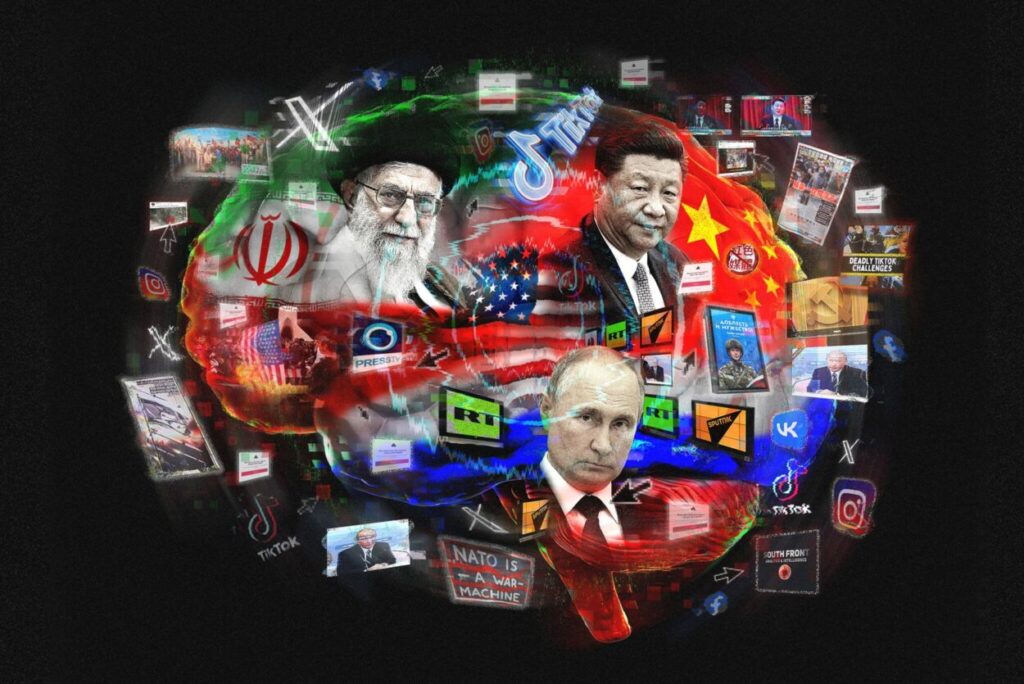
In recent years, governments, political movements, and non-state actors have increasingly employed disinformation campaigns as strategic tools of political influence. These campaigns are often designed to manipulate public opinion, undermine trust in democratic institutions, and amplify political divisions within targeted societies.
This study examines the rise of information warfare in the twenty-first century and analyzes how disinformation campaigns have become central components of geopolitical competition. It also explores the implications of these developments for democratic governance, political stability, and international security.
Introduction
Information has always been a powerful instrument in political competition. Governments have historically used propaganda, media influence, and strategic communication to shape public perceptions and influence political outcomes.
However, the digital revolution has dramatically expanded the scale and speed at which information can spread. Online platforms allow messages to reach millions of people within seconds, while algorithm-driven content distribution systems amplify messages based on engagement rather than accuracy.
These structural features of the digital information ecosystem have created fertile ground for disinformation campaigns. Unlike traditional propaganda, which was often produced by state-controlled media institutions, modern disinformation campaigns can originate from a wide range of actors and spread through decentralized online networks.
According to the Oxford Internet Institute, organized social media manipulation campaigns have been documented in more than 80 countries, demonstrating the global scale of the problem (Oxford Internet Institute Global Disinformation Report).
The Concept of Information Warfare
Information warfare refers to the strategic use of information to gain a political or military advantage over an adversary. This concept encompasses a wide range of activities, including propaganda, cyber operations, psychological operations, and disinformation campaigns.
Disinformation differs from misinformation in an important way. While misinformation involves the unintentional spread of false information, disinformation is deliberately created and distributed with the intention of misleading audiences.
Political scientist Thomas Rid describes modern information warfare as “the weaponization of information ecosystems to shape political realities.” (Rid, Active Measures: The Secret History of Disinformation and Political Warfare).
Disinformation campaigns often target democratic societies because open information environments and free media systems provide opportunities for manipulation.
Social Media and the Amplification of Disinformation
Social media platforms have become central battlegrounds in the struggle over information integrity. Platforms such as Facebook, X (formerly Twitter), TikTok, and YouTube enable users to share information widely and rapidly.
However, the algorithms used by these platforms often prioritize content that generates strong emotional reactions, including outrage or fear. As a result, misleading or sensational information can spread more quickly than accurate reporting.
Researchers at the Massachusetts Institute of Technology found that false news spreads significantly faster on social media than verified information (MIT Media Lab Study, Science Journal).
Disinformation campaigns exploit these dynamics by producing emotionally charged narratives that attract attention and encourage users to share content widely.
Foreign Interference and Election Manipulation
One of the most widely discussed forms of disinformation warfare involves attempts by foreign actors to influence elections and political debates.
Investigations by European and American authorities have documented efforts by foreign actors to manipulate online discourse during election campaigns. These operations often involve coordinated networks of fake social media accounts, automated bots, and state-sponsored media outlets.
The goal of such campaigns is not always to support a particular candidate or political party. In many cases, the objective is to deepen political polarization and undermine public trust in democratic institutions.
According to the European External Action Service, foreign disinformation campaigns aim to “erode public confidence in democratic governance and weaken societal cohesion.” (EEAS Strategic Communication Report).
Hybrid Warfare and Information Operations
Disinformation campaigns are often part of broader hybrid warfare strategies that combine military, economic, and informational tools.
Hybrid warfare strategies are designed to weaken adversaries without triggering direct military confrontation. By manipulating information ecosystems, actors can shape political narratives, influence public opinion, and destabilize governments.
Information operations may also be coordinated with cyber attacks, economic pressure, or diplomatic initiatives.
Security analysts have increasingly recognized that information warfare can play a decisive role in modern geopolitical competition.
The Impact on Democratic Governance
The spread of disinformation poses significant challenges for democratic governance. Democracies rely on informed citizens who can evaluate competing political arguments and participate meaningfully in political processes.
When information ecosystems become saturated with false or misleading narratives, it becomes more difficult for citizens to distinguish between credible information and manipulation.
This erosion of information integrity can weaken democratic institutions and undermine public trust in elections, media organizations, and government authorities.
According to Freedom House, digital disinformation has become one of the most significant threats to democratic governance in the digital age.
Policy Responses and Regulation
Governments and international organizations have begun exploring various strategies to combat disinformation.
Some countries have introduced regulations requiring social media platforms to remove false information or increase transparency about political advertising.
The European Union has launched several initiatives aimed at improving information integrity, including the Digital Services Act and the Code of Practice on Disinformation.
These initiatives seek to increase accountability for online platforms while protecting freedom of expression.
However, policymakers face difficult trade-offs between regulating harmful content and preserving open public debate.
The Future of Information Warfare
The future of disinformation warfare will likely be shaped by emerging technologies such as artificial intelligence and deepfake media.
AI-generated content can produce highly convincing images, audio recordings, and videos that appear authentic but are entirely fabricated.
Such technologies could significantly increase the sophistication of disinformation campaigns, making it even more difficult for audiences to verify information.
Researchers warn that the next generation of information warfare may involve fully automated disinformation campaigns capable of generating and distributing large volumes of fabricated content.
These developments highlight the need for stronger digital literacy, improved verification technologies, and greater international cooperation.
Disinformation warfare has emerged as one of the defining challenges of the digital age. The manipulation of information ecosystems has become a powerful tool of geopolitical competition, capable of influencing political outcomes and destabilizing democratic societies.
As digital technologies continue to evolve, the scale and sophistication of disinformation campaigns are likely to increase.
Protecting the integrity of information systems will therefore require coordinated efforts from governments, technology companies, civil society organizations, and international institutions.
Safeguarding democratic governance in the twenty-first century will depend not only on military and economic power but also on the resilience of the information environment.