Lessons from the Iran War
European Institute for Peace and Governance (EIPG)
The widespread use of unmanned aerial vehicles (UAVs) in the Iran war represents a defining shift in modern warfare. Over the past decade, drones have moved from being primarily surveillance platforms to becoming central offensive weapons capable of conducting precision strikes, reconnaissance missions, and large-scale saturation attacks against sophisticated air defense systems.
The Iran conflict illustrates how relatively inexpensive unmanned systems can reshape military strategy. In recent months, large numbers of Iranian drones have been deployed in coordinated attacks across the Middle East, targeting military bases, energy facilities, and strategic infrastructure. Analysts increasingly argue that drone warfare is no longer a supplementary capability but rather a core element of contemporary conflict.
According to security analysts cited in recent research, the Iran war demonstrates how drone warfare allows states with limited conventional air power to compensate for strategic weaknesses by deploying low-cost autonomous strike systems.
The Strategic Logic of Drone Warfare
Iran’s investment in drone technology reflects a broader strategic calculation. For decades, Iran has faced significant constraints on its conventional air force due to sanctions and limited access to modern fighter aircraft. As a result, Iranian military planners prioritized missile technology and unmanned aerial systems as alternative tools of power projection.
Drones offer several strategic advantages. They can be produced at relatively low cost, operate over long distances, and conduct missions that would otherwise require expensive aircraft or cruise missiles. This asymmetry creates a structural advantage for the attacker. As analysts have noted, the use of low-cost drones forces defenders to expend expensive interceptor missiles to neutralize comparatively cheap threats.
This cost imbalance has become one of the defining features of modern drone warfare. A loitering munition costing tens of thousands of dollars may require an interceptor missile costing hundreds of thousands—or even millions—to stop it.
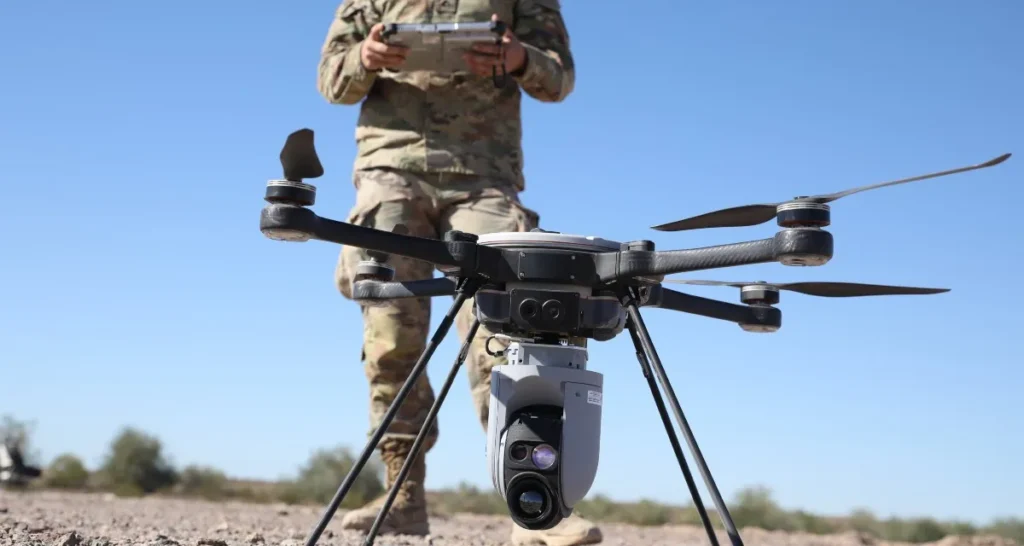
The Rise of the Shahed Drone
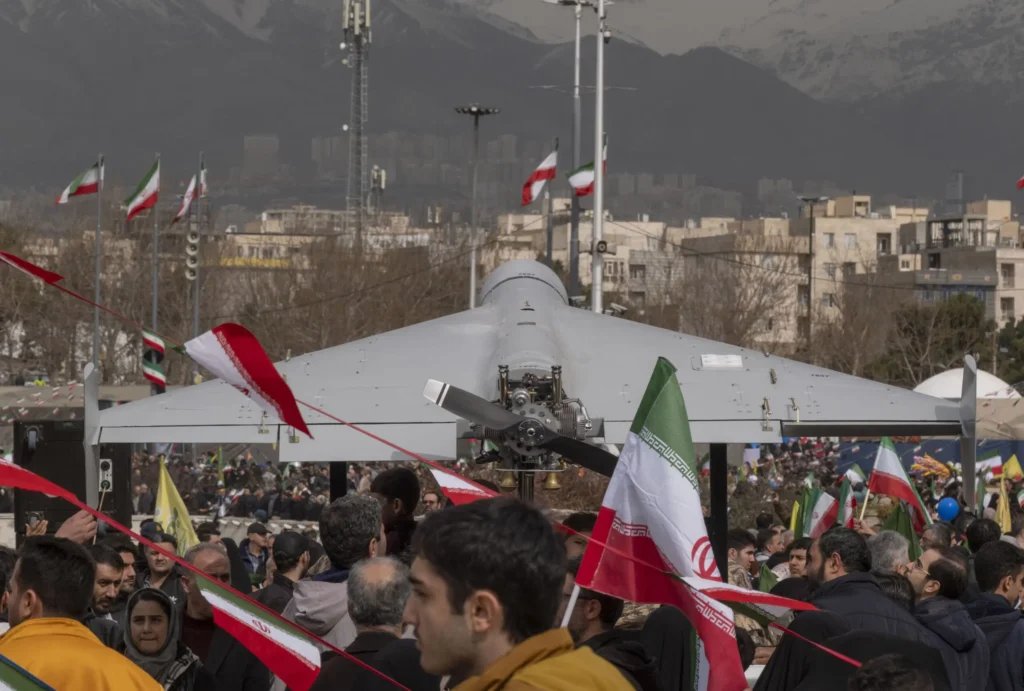
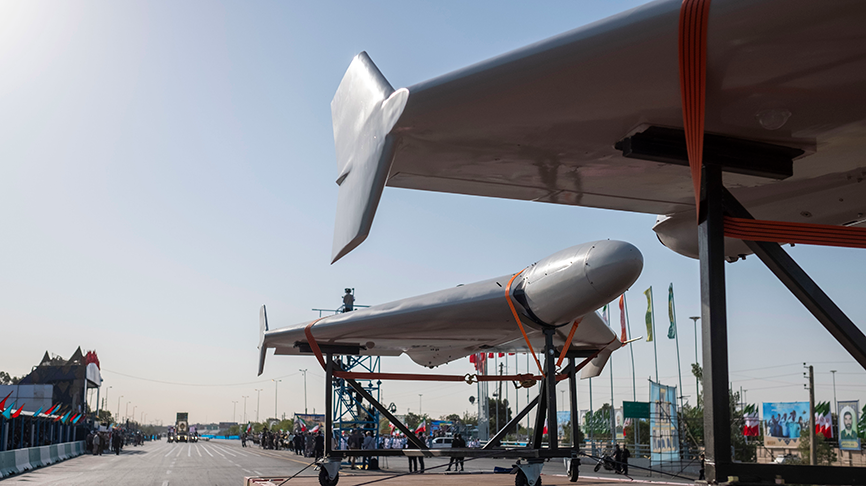
Among the various systems deployed during the Iran war, the Shahed-series drones have emerged as one of the most influential weapons platforms. These drones are designed as loitering munitions, meaning they can remain airborne while searching for targets before diving into them as explosive weapons.
The Shahed-136, often described by analysts as a “poor man’s cruise missile,” has become particularly prominent in recent conflicts. Its relatively simple design allows mass production, enabling military planners to launch large waves of drones simultaneously in an effort to overwhelm enemy air defenses.
The widespread use of these drones has transformed the tactical dynamics of the Iran war. Rather than relying on single high-value strikes, Iranian forces increasingly deploy large numbers of drones alongside missiles, creating complex attack patterns that strain defensive systems.
Military analysts now view the Shahed platform as one of the most influential drone designs in modern conflict. Versions of the system have been used in several regional conflicts and have been copied or adapted by multiple military actors.
Drone Swarm Tactics and Saturation Attacks
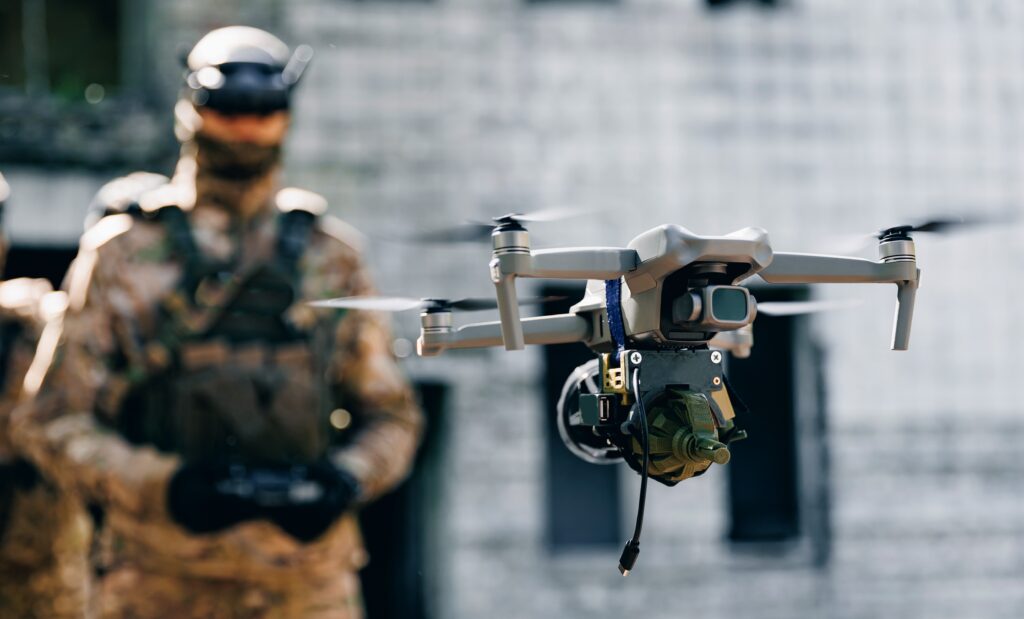
One of the most important tactical developments observed in the Iran war is the use of drone swarm tactics. In these operations, dozens or even hundreds of drones are launched simultaneously toward a target area.
The objective is not necessarily for every drone to reach its target. Instead, the strategy aims to overwhelm defensive systems by forcing them to intercept multiple threats simultaneously.
Air defense systems were historically designed to counter aircraft and ballistic missiles. Small drones present a different type of challenge. They often fly at low altitudes, produce weak radar signatures, and move slowly compared to missiles.
These characteristics make detection and interception significantly more difficult.
In several reported incidents during the war, hundreds of drones were directed toward Gulf states as part of coordinated waves of attacks that also included missiles.
Such tactics illustrate the growing complexity of modern air defense environments.
Regional Expansion of Drone Warfare
The Iran war has also demonstrated how drone warfare can expand conflict across regional borders. Unlike traditional military operations, drones can be launched from multiple locations and controlled remotely, making it easier to conduct cross-border strikes.
Recent reports indicate that Iranian drones have targeted infrastructure and facilities in several countries across the Middle East and neighboring regions.
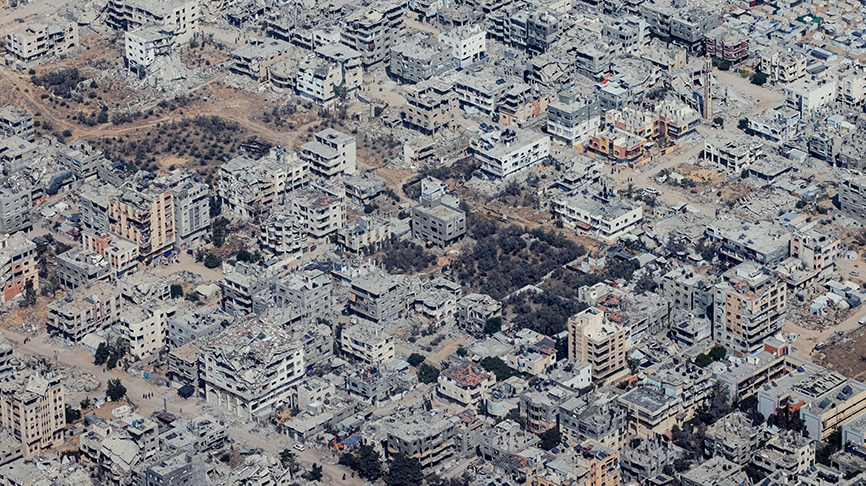
These developments highlight the growing vulnerability of civilian infrastructure to drone attacks. Airports, energy installations, and transportation networks have become increasingly exposed to aerial threats from unmanned systems.
Energy infrastructure appears particularly vulnerable. Drone strikes on Gulf energy facilities have already disrupted global supply chains and triggered fluctuations in oil and gas markets.
The ability of relatively inexpensive drones to threaten critical infrastructure represents one of the most significant strategic challenges facing regional governments.
Drone Carriers and the Naval Dimension
Another emerging dimension of drone warfare is the development of drone carrier vessels. These ships function as mobile launch platforms capable of deploying large numbers of drones at sea.
Recent military operations have targeted Iranian naval vessels reportedly equipped to launch drones from modified container ships.
The integration of drones into naval strategy represents a significant evolution in maritime warfare. Drone carriers allow states to extend their reach across maritime regions and conduct aerial operations far from their own territory.
Such capabilities could significantly alter naval power dynamics in strategic waterways such as the Persian Gulf.
The Economics of Drone Warfare
One of the most striking aspects of the Iran war is the economic asymmetry created by drone warfare. Drones are relatively cheap to produce, especially compared with advanced fighter aircraft or cruise missiles.
However, defending against drones can be extremely expensive.
Interceptor missiles used by advanced air defense systems can cost millions of dollars per launch. This creates a strategic imbalance where attackers can impose significant economic costs on defenders by launching large numbers of inexpensive drones.
This economic asymmetry has led some analysts to describe drone warfare as a form of attrition strategy, in which the attacker attempts to exhaust defensive resources over time.
The Future of Drone Warfare
The lessons of the Iran war are likely to shape military strategy worldwide.
Several trends are already becoming visible.
First, the proliferation of drone technology is accelerating. Many countries are now investing heavily in unmanned systems, recognizing their strategic value.
Second, advances in artificial intelligence may enable drones to operate with greater autonomy, allowing them to coordinate attacks without direct human control.
Third, militaries are increasingly investing in counter-drone technologies such as laser weapons, electronic warfare systems, and AI-driven detection networks.
These developments suggest that drone warfare will remain a central feature of modern conflict for decades to come.
Conclusion
The Iran war has demonstrated that drones are no longer peripheral tools of modern warfare. They have become central strategic weapons capable of reshaping the dynamics of conflict.
By combining low cost, operational flexibility, and mass deployment capabilities, drones allow states to project power in ways that were previously impossible.
The lessons of the Iran war will likely influence military doctrine, defense planning, and global security debates for years to come.
As drone technology continues to evolve, understanding its strategic implications will be essential for policymakers, military planners, and international institutions seeking to manage the risks of future conflict.