European Institute for Peace and Governance (EIPG)
Over the past decade, unmanned aerial vehicles (UAVs) have fundamentally reshaped the character of warfare in the Persian Gulf. Once primarily used for reconnaissance and intelligence gathering, drones have evolved into complex platforms capable of conducting precision strikes, long-range surveillance, electronic warfare, and coordinated swarm attacks. The Persian Gulf has become one of the most active theaters for the deployment of such technologies, with Iran, Gulf states, Israel, and various non-state actors integrating drones into their military strategies.
The increasing reliance on UAVs reflects broader technological changes in global conflict. Drones are cheaper to produce than conventional aircraft, require fewer personnel, and can operate in environments that would otherwise pose significant risks to pilots. As military analysts have observed, drones are transforming the economics of warfare by enabling relatively weaker actors to challenge technologically superior adversaries. According to the International Institute for Strategic Studies, “the rapid proliferation of armed drones has lowered the threshold for conducting long-distance strikes and has expanded the geographic reach of regional conflicts” (IISS Military Balance Report, 2024).
In the Persian Gulf, these dynamics intersect with one of the most strategically important regions of the world. The Gulf hosts critical energy infrastructure, global shipping lanes, and major military bases belonging to both regional and international powers. As a result, the introduction of drone warfare into this environment has heightened concerns about escalation, energy security, and regional stability.
The Strategic Rise of Drone Warfare
The emergence of drone warfare in the Persian Gulf reflects both technological innovation and strategic necessity. For many regional actors, drones offer an opportunity to offset limitations in conventional airpower. Iran, in particular, has invested heavily in UAV technology as part of its broader asymmetric warfare strategy.
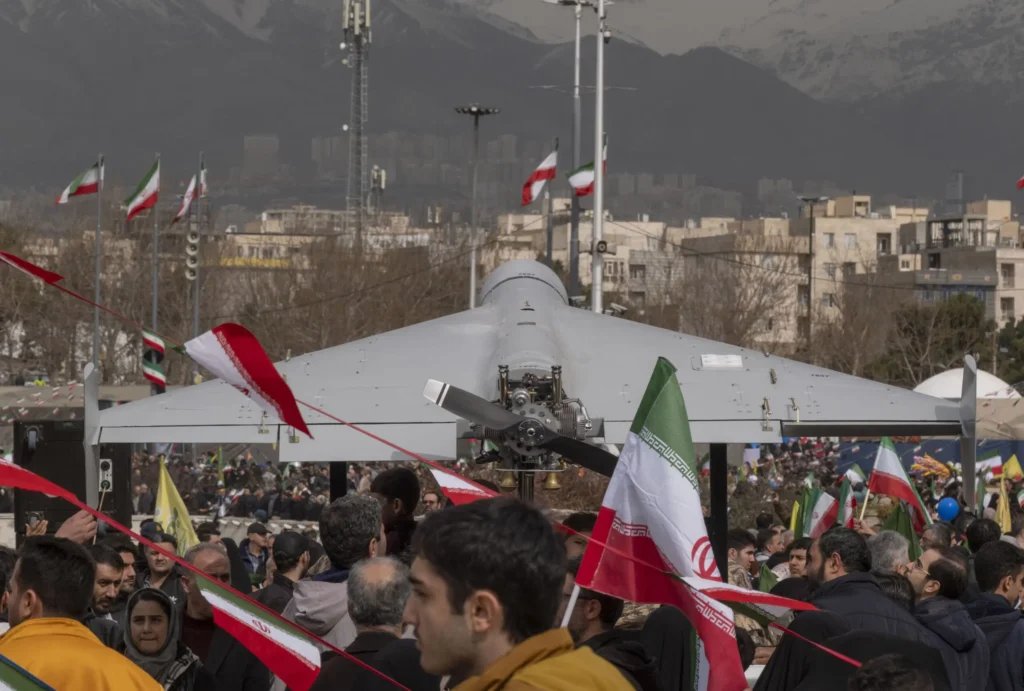
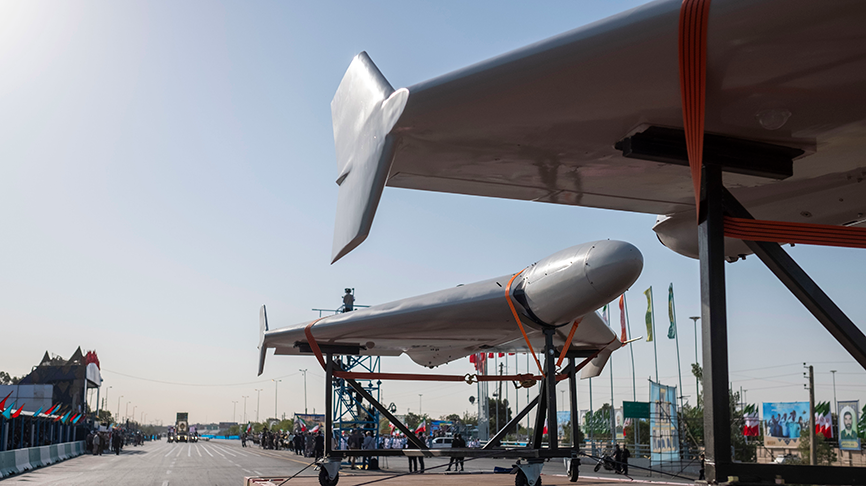
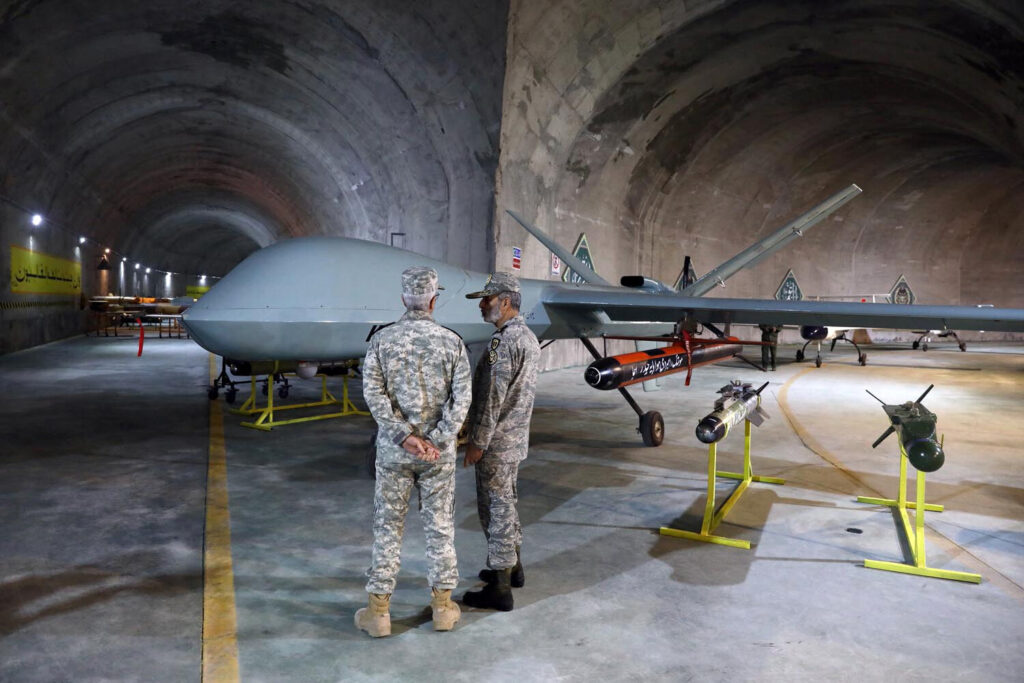
Due to decades of sanctions and restrictions on military procurement, Iran has developed indigenous drone capabilities to compensate for an aging air force. The Iranian drone program now includes reconnaissance drones, combat drones, and loitering munitions designed for precision strikes. Systems such as the Shahed-136 and Mohajer-6 have become emblematic of this approach.
According to the U.S. Department of Defense, Iran possesses one of the largest and most diverse drone arsenals in the Middle East. A Pentagon assessment noted that “Iran’s unmanned aerial vehicle program represents a central component of its regional power projection strategy” (U.S. Department of Defense, 2023 Report on Military Power of Iran).
These drones allow Iranian forces and allied groups to conduct long-range operations without relying on conventional aircraft. This capability has significantly altered the strategic balance in the Persian Gulf.
Technology and Capabilities of Modern Drones
Modern drones deployed in the Persian Gulf range from small surveillance platforms to sophisticated combat systems capable of carrying guided munitions. The technological sophistication of these systems has increased rapidly in recent years.
Loitering munitions, sometimes referred to as “suicide drones,” represent one of the most significant developments. These systems combine the surveillance capabilities of drones with the destructive power of missiles. Once launched, they can circle a target area before striking when an appropriate target is identified.
Another key technological development is the integration of satellite navigation systems and autonomous targeting algorithms. These features allow drones to travel long distances with minimal human intervention. Some advanced systems can even coordinate attacks with multiple drones operating simultaneously.
According to a study by the Center for Strategic and International Studies (CSIS), “the next generation of UAV systems is increasingly incorporating artificial intelligence to improve navigation, target identification, and swarm coordination” (CSIS, Emerging Military Technologies Report, 2024).
These developments suggest that drones will become even more capable in future conflicts.
Drone Swarms and Asymmetric Warfare
One of the defining characteristics of drone warfare in the Persian Gulf is the use of swarm tactics. Instead of launching a single high-value aircraft, attackers deploy large numbers of drones simultaneously in order to overwhelm defensive systems.
Swarm attacks present significant challenges for traditional air defense networks. Systems designed to intercept ballistic missiles or fighter aircraft are often less effective against small drones flying at low altitudes. As a result, even advanced military forces can struggle to intercept large numbers of drones.
Analysts at RAND Corporation have highlighted the strategic implications of swarm warfare, noting that “mass drone attacks could saturate air defense systems and dramatically alter the balance between offensive and defensive capabilities” (RAND Corporation, Autonomous Systems in Modern Warfare, 2023).
In the Persian Gulf, these tactics have been used to target energy infrastructure, military bases, and shipping vessels. The relatively low cost of drones means that attackers can afford to deploy them in large numbers, forcing defenders to expend expensive interceptor missiles.
This economic asymmetry has become a defining feature of modern drone warfare.
Energy Infrastructure as a Drone Target
One of the most significant security concerns in the Persian Gulf is the vulnerability of energy infrastructure to drone attacks. Oil refineries, pipelines, and export terminals represent critical nodes in the global energy supply chain.
The 2019 attack on Saudi Arabia’s Abqaiq and Khurais oil facilities demonstrated the destructive potential of drone warfare. The coordinated strike temporarily removed nearly 5 percent of global oil production from the market, sending shockwaves through global energy markets (Energy Information Administration, 2020).
Since then, governments across the Gulf have invested heavily in counter-drone defenses to protect their energy infrastructure. However, experts warn that the rapid evolution of drone technology continues to pose significant challenges.
As one security analyst noted, “energy facilities are inherently vulnerable because they are large, fixed installations that cannot easily be moved or concealed” (International Energy Agency, Energy Security Report, 2023).
This vulnerability has made energy infrastructure a central focus of regional security planning.
Maritime Security and Drone Threats
The Persian Gulf is also one of the world’s busiest maritime corridors, with millions of barrels of oil transported daily through the Strait of Hormuz. The introduction of drones into this maritime environment has created new risks for commercial shipping.
Drones can be used to monitor shipping movements, conduct reconnaissance on naval vessels, or attack tankers directly. In some cases, drones have been used in conjunction with naval mines and missile systems to create layered maritime threats.
According to the U.S. Naval Institute, “the proliferation of maritime drones and aerial UAVs is reshaping naval strategy in confined waterways such as the Persian Gulf” (U.S. Naval Institute Proceedings, 2024).
These developments have prompted increased naval patrols and multinational security initiatives aimed at protecting shipping lanes.
Regional Military Responses
The rapid expansion of drone warfare has triggered a wave of military modernization across the Persian Gulf. Gulf states have invested billions of dollars in air defense systems designed to intercept drones and missiles.
Countries such as Saudi Arabia and the United Arab Emirates have acquired advanced systems including Patriot missile batteries and integrated radar networks. At the same time, regional governments are exploring new technologies such as laser weapons and electronic warfare systems capable of disabling drones without launching expensive interceptor missiles.
Israel has also developed sophisticated counter-drone technologies, including the Iron Dome system and advanced electronic warfare capabilities. These systems are increasingly being integrated into regional defense networks.
Despite these efforts, experts caution that the pace of drone innovation may continue to outstrip defensive capabilities.
The Future of Drone Warfare in the Gulf
Looking ahead, drone warfare is likely to become even more central to military strategy in the Persian Gulf. Advances in artificial intelligence, miniaturization, and swarm coordination could significantly expand the capabilities of future UAV systems.
Some analysts believe that fully autonomous drone swarms could emerge within the next decade. These systems would be capable of coordinating attacks without direct human control, dramatically increasing their operational flexibility.
The implications of such technologies are profound. Autonomous drone swarms could conduct complex military operations, disrupt critical infrastructure, and potentially escalate conflicts more rapidly than traditional military systems.
For policymakers and military planners, understanding these risks will be essential for maintaining stability in one of the world’s most strategically important regions.
Drone warfare has emerged as one of the most transformative developments in modern military technology. In the Persian Gulf, the rapid proliferation of UAV systems has reshaped regional security dynamics, altered military strategies, and introduced new risks for energy infrastructure and maritime trade.
As drones continue to evolve, they are likely to play an increasingly central role in regional conflicts. The Persian Gulf therefore represents both a testing ground and a warning about the future of warfare.
Managing the risks associated with drone proliferation will require not only technological innovation but also diplomatic engagement and international cooperation aimed at reducing the likelihood of escalation.
The future security of the Persian Gulf—and the stability of global energy markets—may depend in large part on how effectively governments respond to the challenges posed by drone warfare.