European Institute for Peace and Governance (EIPG)
In the early hours of 28 February 2026, Israel and the United States launched the first stage of their military campaign on Iran targeting key leadership, air defence capabilities, missile sites and the Islamic Revolutionary Guard Corps (IRGC) Navy.
As the opening salvo, Israel and US strikes attacked a leadership meeting in Tehran that included Supreme Leader Sayyid Ali Khamenei, Iran’s defence minister, the chief of staff of the armed forces and the commander of the IRGC. All were killed in the attack.
Prioritising surprise, the first attack wave used long-range munitions, such as Israeli air-launched ballistic missiles and US Tomahawks. The timely Iranian response – via missile and uninhabited aerial vehicles (UAVs) – suggests strike authorities were approved in advance and indicates IRGC commanders remain loyal to their mission, and the interim leadership coalescing around senior official Ali Larijani.
Iran fired hundreds of ballistic missiles and UAVs in retaliation: about 150–200 missiles alone against Israel, circa 140 against the United Arab Emirates and 63 against Qatar. The Gulf Cooperation Council was defended by a mix of local and surged US Patriot batteries, some coupled with the newest-generation radars.
Next, after the decapitation strike, US and Israeli efforts focused on destroying remaining Iranian air defence assets, neutering command-and-control hubs of the regime forces, and degrading missile capabilities.
Israeli and US air supremacy was established in the first hours. Their fighter jets operated with impunity over major Iranian cities and bases, with no casualties reported. The Israeli Air Force flew 200 fighter jets to destroy Western Iran’s air defences. The Iranian Air Force was attacked on the ground. Iranian footage shows US MQ-9 Reapers circling over Tehran and Shiraz.
A division of labour was apparent, with the US destroying missile bases and launchers in South and Central Iran, while Israel focused on the north of the country. Repeated attacks in some areas like Kermanshah indicated ongoing battle damage assessments and retargeting where necessary to get harder targets – many missile facilities are partially underground and resilient to single strikes. The US also unleashed new capabilities like the Precision Strike Missile fired by a High Mobility Artillery Rocket System launcher and the Low-cost Uncrewed Combat Attack System UAV, imitating Iranian Shaheds.
Finally, long-standing Iranian threats to block or mine the Strait of Hormuz saw the US target the IRGC Navy during the initial wave. Satellite imagery shows a burningAlvand-class frigate, United States Central Command’s (CENTCOM) announced it sunk a Jamaran-class corvette, and videos of attacks against the military ports in Chabahar and Bandar Abbas surfaced as well. Minimal ongoing traffic in the strait indicates the IRGC Navy does not have a full blockade in place, and threats are more dependent on missiles and UAVs.
Neither the US nor Israel experienced any losses that would impede or constrain their ability to wage a campaign despite the first confirmed losses announced by CENTCOM late on 1 March. Both or either can be expected to gradually shift the focus away from Iranian leadership and missile capabilities towards degradation of the security and intelligence apparatus – IRGC, Basij, Ministry of Intelligence and Security (MoIS) – to set the conditions for public uprisings and regime change.
Throughout, the US and Israel have demonstrated the breadth and reach of their combined air power capabilities, controlling the operational tempo and sequencing effects of choice. Simultaneous strikes at Konarak naval facilities in the south and the Tabriz element of Iran’s air defence network in the north, over 2,000 kilometres apart, have been accompanied by a concentration of Israeli air power on the centres of power and decision making in Tehran.
Previously, many mistakenly believed that, with only 200–250 fighter aircraft, the question of logistics and combat mass would allow only three to four days of US strikes, and thus sustained operations were beyond reach. An additional 300 Israeli fighter jets, a Mediterranean-enabled logistics chain and air supremacy over Iran has fundamentally changed that calculus. Size matters, but thus far the combined shape and configuration of US and Israeli forces have generated strategic freedom and reach, operational efficiency and the tactical flexibility necessary for a campaign to be sustained. Strikes from the continental US remain in reserve.
The ability to modulate targeting between leadership, command and control, missile, air defence, and naval forces across Iran is a product of offensive surprise and the efficiencies inherent in pre-planned attacks against fixed, static targets. Key to this has been the apportionment of northern/central targets to Israel/Jordan-based aircraft and southern/central targets to US naval air forces. This maximum-efficiency application of air power resources has yet to be challenged by Iran’s countermeasures or a changing battlefield.
US–Israeli offensive air power has yet to be re-apportioned at the scale for intensive airborne anti-drone missions like those required in the summer of 2025. US F-15s and F-16s in Jordan, equipped with Advanced Precision Kill Weapon System anti-drone weapons and the defensive air power that the USS Gerald R. Ford brings from the Eastern Mediterranean, remain available for this mission. This tactical flexibility will impact offensive combat mass and operational tempo.
The likely upcoming shift of offensive air operations towards the Iranian security and intelligence apparatus and fielded forces (IRGC, Basij, MoIS, regular forces totalling more than 1.2 million) will require reactive targeting capabilities and more strike capacity. Initial moves have been made with US MQ-9 Reapers already reported to be operating over Tehran and facilitating targeting. The essential campaign enablers (command and control, refuelling, intelligence, electronic attack) required for a tactical shift are close and waiting in the region and the Eastern Mediterranean. Extensive US weapon stocks are pre-positioned in the region but not yet accessible. With every Iranian strike on the GCC, the regional appetite to relax support, access, basing and overflight restrictions is shifting. Air-campaign planning will have anticipated this.
Recent United Kingdom approvals for the US to use British bases have unlocked the capacity of B-52 and B-1 bomber fleets based in the UK and Diego Garcia. Each is capable of carrying over 84 500 lb bombs, more than quadruple the capacity of the F-15. Size is about to matter more, and the nature of this air campaign is set to change.
The naval front
Nick Childs
On the naval front, United States President Donald Trump has said the operation against Iranian targets has destroyed and sunk nine Iranian naval vessels and is ‘going after the rest’, while Iran’s naval headquarters has been ‘largely destroyed’. At the same time, oil prices have risen after at least three merchant ships appeared to have been targeted or damaged in and around the entrance to the Gulf. The Strait of Hormuz, the maritime gateway in and out of the Gulf, is the conduit for 34% of seaborne oil trade flows and 30% of liquefied natural gas exports. But significant numbers of vessels are currently steering clear.
The naval dimension was always likely to be significant in this conflict. The US has deployed two aircraft carrier strike groups to the region, centred on the carriers USS Abraham Lincoln and USS Gerald R. Ford, in the northern Arabian Sea and the Eastern Mediterranean, respectively, along with other major warships. These have featured in posts by US forces on the operation, including multiple cruise missile launches from deployed destroyers. It was always going to be a concern that Iranian military responses could come at sea.
The action against Iran’s naval forces will have been intended to pre-empt the threat of a concerted Iranian naval response, including closing the Strait of Hormuz. US operations will continue to seek to forestall that, including threats from anti-ship missiles and naval mines – although such a move would directly affect the Iranian economy and those of some of its main international friends.
The very fact of intense naval activity in the region was always going to dislocate regional maritime traffic to an extent. Iranian attacks have also disrupted port operations in Bahrain, Oman and the United Arab Emirates (UAE) and reportedly hit a UAE offshore oil platform as well. It is also reported that electronic jamming is affecting maritime tracking systems.
US action may degrade the threat but not eliminate it entirely. The experience of the Houthi anti-shipping campaign in and around the Red Sea was that even relatively limited, sporadic attacks can raise concerns. This may be relatively contained at the moment. But several major shipping operators have already said they will reroute away from the region again. There will be concern about further escalation, including the Houthis taking a hand. The US Navy may be forced to take more direct action to protect shipping, which could also expose its vessels more. The European Union has said it is beefing up its naval mission in the region, Operation Aspides.
US forces have dismissed Iranian claims to have hit the carrier USS Abraham Lincoln but implicitly acknowledged that they tried. That will remain a concern. Trump has said the operation could continue for four weeks. The US Navy’s current two-carrier force could likely sustain that. But the overall US carrier force is overstretched. The prospect of having to rotate a new wave of carriers into the region would add to the strain. Furthermore, there will be growing concern over naval weapons stockpiles if the campaign is prolonged.
US politics and the war against Iran
Dana Allin
United States President Donald Trump’s second-term war against Iran has now established a certain clarity about his first. We can now say with confidence that the most consequential act of that first term was Trump’s withdrawal, against the advice of advisers, from the Iran nuclear agreement, the Joint Comprehensive Plan of Action. The ongoing air attacks have explicitly established what that withdrawal expressed implicitly: that the US will now be a state that chooses war over diplomacy – or, to put it in slightly more benign terms, results over rules.
The American people, however, are reluctant about this choice, based on their accurate intuition that no one knows what the results will be. Among the results so far is regime decapitation – Israel’s killing, with the aid of US intelligence, of Iran’s Supreme Leader, Sayyid Ali Khamenei, a cleric undoubtedly with blood on his hands. Trump, who campaigned against foreign wars with special opprobrium against the Iraq war, has called for actual regime change in Iran, but his plan appears to be mainly some hope that an aggrieved majority of Iranian people will seize the occasion and conduct their own revolution, while somehow avoiding the kind of brutal civil war arguably foretold by the mass killings of demonstrators in January 2026.
Since the war began, Trump has also told at least one reporter that he is willing to talk to an Iranian leadership that has reorganised itself according to its previous plans for succession. It is hard to know what to make of these musings, since Iran’s leaders before the attack had been clear that they were willing to negotiate on the nuclear question. Talks were ongoing under the good offices of Oman. There had appeared to be a good basis for agreement, given that the Americans were demanding an end to uranium enrichment of an Iranian government that, after the Twelve-Day War of June 2025, was not in a position to enrich uranium anyway for the foreseeable future.
As democratic stakeholders in a geopolitical superpower, Americans have gotten used to thinking in terms of results rather than rules. But they were deeply unhappy with the results of America’s last big wars of regime change, a generation ago in Afghanistan and Iraq. At the beginning of this joint US–Israel campaign against Iran, only about a third of Americans supported the adventure, according to an instant poll from YouGov. Forty-four percent were opposed. As pollster Elliot Morris has noted, this stands in sharp contrast to US opinion at the beginning of the Iraq war, when 71% of Americans supported the war in a March 2003 Pew poll. As Morris also notes, American support for military action tends to be strongest at the beginning.
It is also striking to compare what former president George W. Bush did to prepare Americans for the Iraq invasion to Trump’s comments. However tendentious the Bush administration’s use of intelligence to claim an almost imminent Iraqi threat of weapons of mass destruction, Bush officials went at it for over a year, to the point where a large share of Americans believed, falsely, that Iraqi dictator Saddam Hussein had been behind the 11 September 2001 attacks.
This time, Republican lawmakers have lined up in strong support, except for a few notable MAGA stalwarts who shared and took Trump’s campaign as a presidential candidate against foreign wars seriously. Democratic lawmakers have criticised the resort to war, though, again, with the exception of some strongly pro-Israel voices on the centre-left.
In some ways, the Democrats’ ambiguity reflects their ongoing debate about political strategy at home. They have a base of passionate Democrats who want the party to stand resolutely against the president’s violations of laws and norms at home. Many party strategists believe it makes more sense to focus on voters’ resolute dissatisfaction with economic conditions. Voters are probably more nervous about the war’s wisdom than its legality, an early verdict that will endure or change depending on its results.
Impact on the Gulf
Hasan Alhasan
The Arab Gulf states are on the frontlines of a war they sought to avert. During the first two days of the conflict, Iran focused its retaliation just as much on neighbouring Arab Gulf states as it did on Israel. Although Iranian targeting initially appeared to single out United States military bases in Gulf territories, Iran has expanded its target set to include high-rise buildings in densely populated Gulf cities, ports and oil infrastructure. Saudi and Emirati pledges not to allow territories or airspaces to be used militarily against Iran have offered no protection. Even Oman, which played a pivotal role in mediating US-Iran talks, has been subjected to uninhabited aerial vehicle (UAV) attacks targeting the strategically located Duqm port.
Iran’s apparent wager that attacks on the Arab Gulf states would generate regional pressure on US President Donald Trump’s administration to de-escalate so far appears misplaced. Despite their geographic proximity to Iran, air and missile defences in the Arab Gulf states appear to be operating effectively, with interception rates based on initial reports from the United Arab Emirates (UAE) and Qatar exceeding 90%. Instead of driving a wedge between the US and Arab Gulf partners, however, Iranian attacks appear to be doing the opposite. The Arab Gulf states, except Oman, have released a joint statement with the US affirming they ‘stand united’ against Iranian attacks against ‘civilians and … countries not engaged in hostilities’.
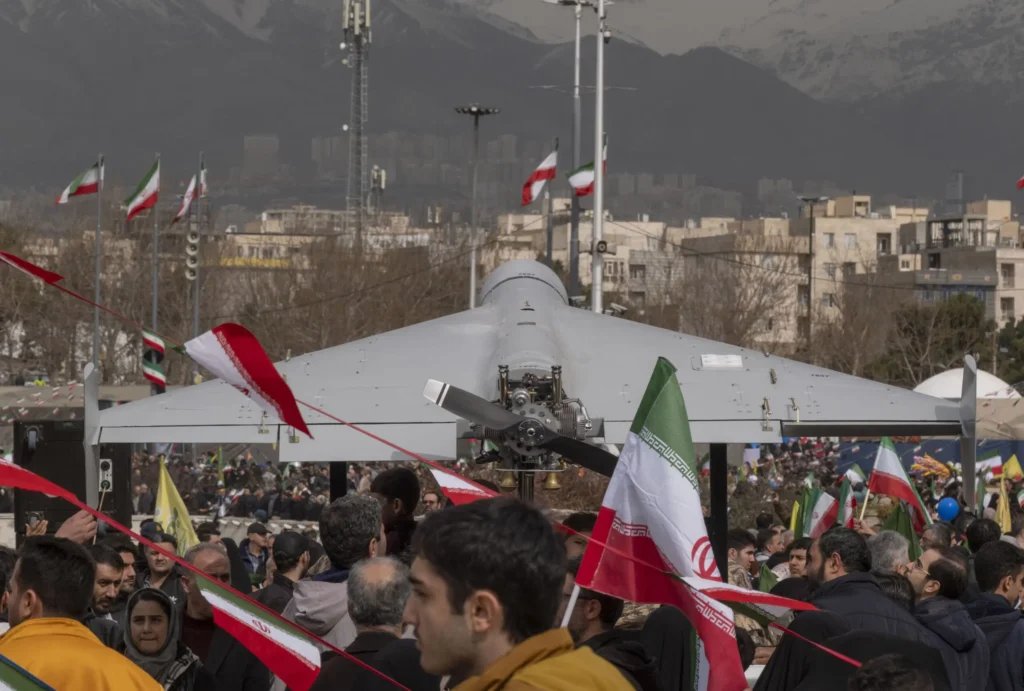
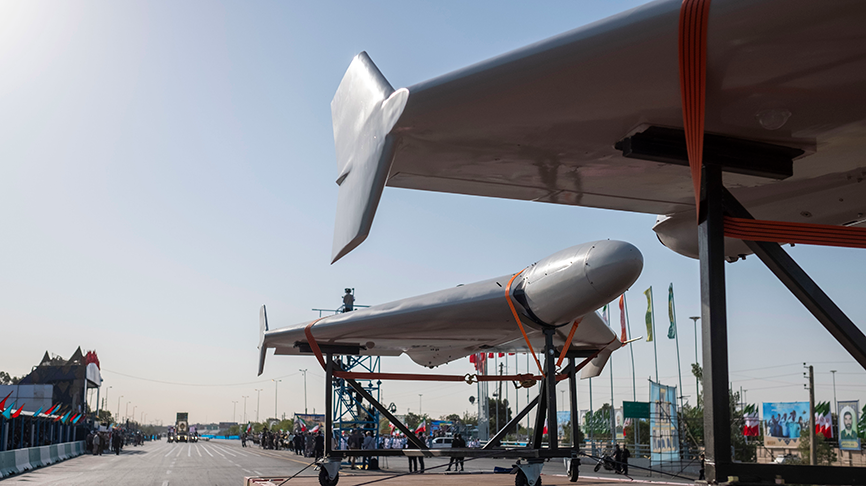
Nonetheless, Iran may be able to impose steep economic and reputational costs on the Arab Gulf states. Iran’s Shahed-136 UAVs have proved difficult to intercept; they represent a relatively inexpensive option for Iran to quickly exhaust the inventories of interceptors in the Arab Gulf states. Its targeting of Gulf oil and gas infrastructure, including successful hits on Saudi Arabia’s Ras Tanura refinery, oil tankers near the Strait of Hormuz and Qatar’s liquefied natural gas (LNG) facilities, could impact the Arab Gulf states’ ability to export hydrocarbons. In response to Iran’s attacks, Qatar has suspended LNG production, causing European gas prices to soar by 50%. As footage of Iranian UAVs slamming into high-rise buildings circulates, the potential damage to their reputations as safe havens for investors and tourists could pose a long-term challenge to their visions of economic diversification.
The Arab Gulf states have so far limited themselves to defensive operations, activating air and missile defences to intercept incoming Iranian projectiles. But a debate is brewing in Gulf capitals about the merits of strategic patience and restraint. Speaking on the first day of the conflict, UAE Presidential Adviser Dr Anwar Gargash stated that the Arab Gulf states ‘could no longer sit idle and absorb [Iranian] attacks against their facilities’. Reports citing a source close to the Saudi government claim that Saudi Arabia would ‘target “Iranian oil facilities if Iran mounts a concerted attack on Aramco”’. Despite a preference for de-escalation and diplomacy, the Arab Gulf states have options for counter-escalation against Iran, including allowing the US greater access to their airspaces and territories, engaging in pre-emptive strikes against Iranian missile launchers and, in extremis, joining the US campaign against Iran. Although the Arab Gulf states have yet to define a critical threshold beyond which they would counter-escalate, mass casualty events or major outages caused by attacks on critical national infrastructure may push them over the edge.
Direct Gulf involvement carries significant risks, however, especially in the absence of a realistic US end goal. Operationally, Gulf militaries joining the fray may pose coordination challenges with US and Israel. Qatar’s former prime minister, Sheikh Hamad bin Jassim Al Thani warned on X that the Gulf states must not ‘get dragged into direct confrontation with Iran’, a scenario that would ‘exhaust the resources of both parties’ and allow ‘Israel to emerge empowered in the region’. Trump has insinuated that regime change may be the objective of the US military campaign, a task that may be difficult to accomplish using air power alone. This raises the risk of the US–Israel campaign devolving into an open-ended confrontation with Iran, casting a prolonged shadow of instability over the Gulf region.