The European Institute for Peace and Governance (EIPG)
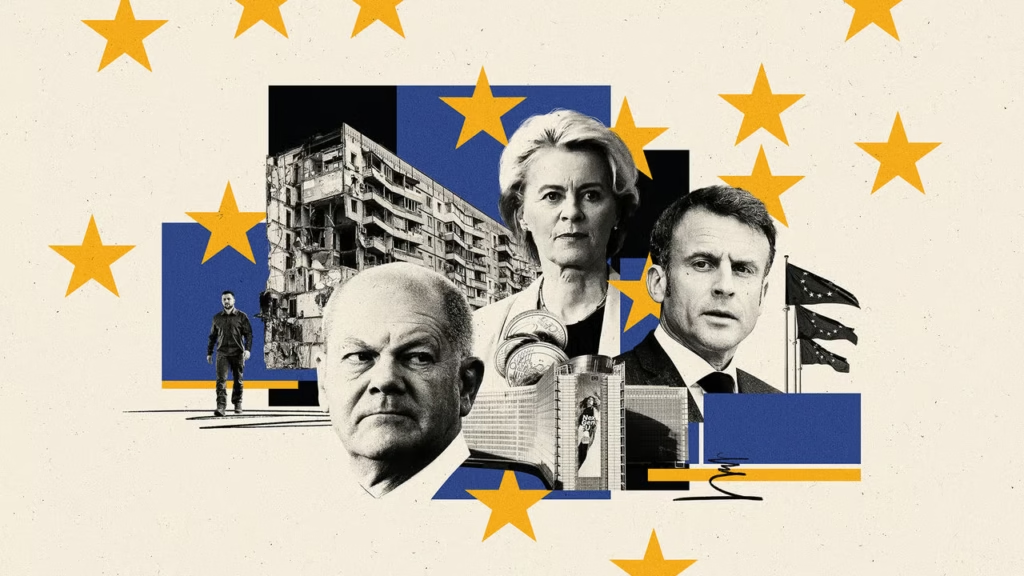
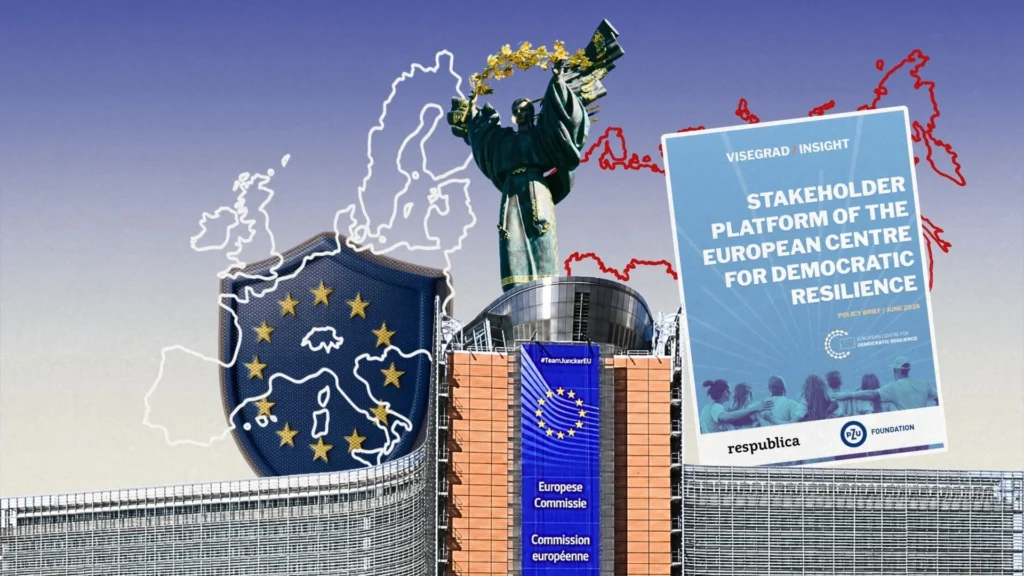
The European Union’s enlargement policy is undergoing one of the most important transformations since the end of the Cold War. For much of the past two decades, enlargement was treated primarily as a technical and institutional process through which candidate countries adopted European legislation, strengthened governance structures, liberalised markets and gradually moved toward membership. Russia’s war against Ukraine and the deterioration of the European security environment have fundamentally changed that calculation. Enlargement is increasingly becoming part of Europe’s security architecture. The central question is no longer simply whether Ukraine, Moldova and the Western Balkan countries can satisfy the institutional requirements of EU membership, but whether the European Union can use integration to stabilise vulnerable states before geopolitical competition, democratic erosion, unresolved conflicts and foreign interference destabilise them.
This transformation returns enlargement to one of the original strategic purposes of European integration. The European project was never merely an economic arrangement. Its deeper objective was to create a political and institutional environment in which conflict became progressively more difficult and cooperation more advantageous. Economic interdependence, common institutions and shared legal frameworks helped transform relationships between European states that had previously fought repeated wars. After the Cold War, enlargement extended this model into Central and Eastern Europe, providing post-communist countries with a framework for democratic consolidation, economic modernisation and geopolitical integration. Today, Europe faces the challenge of applying the same logic under considerably more difficult conditions, including active warfare in Ukraine, unresolved territorial conflicts in Moldova and persistent political instability across parts of the Western Balkans.
For The European Institute for Peace and Governance (EIPG), the strategic significance of this transformation lies in understanding enlargement as a form of preventive peacebuilding. Strong institutions can make countries more resistant to external manipulation. Economic integration can reduce the incentives for political instability. Transparent governance can limit the ability of foreign powers to exploit corruption and patronage networks. Independent institutions can strengthen democratic legitimacy, while gradual integration into European markets and programmes can provide populations with tangible incentives to support reform. Enlargement therefore represents more than the geographical expansion of the European Union. Properly designed, it can become an instrument for expanding the zone of institutional stability surrounding the EU.
From Enlargement Policy to Preventive Peacebuilding
The return of geopolitical competition to Europe has exposed the limitations of treating governance and security as separate policy areas. A state does not need to experience military invasion to become strategically vulnerable. Weak judicial institutions, opaque political financing, corruption, economic dependency, disinformation and declining public confidence can gradually undermine sovereignty from within. Countries situated between competing geopolitical centres are particularly exposed because domestic institutional weakness creates opportunities for external actors to influence political decisions without exercising direct territorial control.
Moldova provides one of the clearest examples. The country’s European integration is occurring alongside concerns over foreign interference, hybrid pressure, energy vulnerability and the unresolved Transnistrian conflict. In such an environment, judicial reform is not merely a technical requirement demanded by Brussels. It is part of national resilience. Transparent political financing is not simply a democratic standard; it reduces opportunities for external influence. Independent media are not merely components of liberal democracy; they can make information manipulation more difficult. Professional public administration is similarly important because states with effective institutions are better equipped to respond to crises without becoming dependent on informal political networks.
This changes the meaning of EU conditionality. Traditionally, candidate countries were required to reform institutions because those institutions needed to meet European membership standards. The emerging security environment creates an additional reason: institutional quality itself has become a strategic capability. The accession process can therefore function as a mechanism through which vulnerable European states strengthen their capacity to resist coercion before they become EU members.
The New European Frontline Runs Through Institutions
Traditional security thinking identifies frontlines geographically. Armies protect borders, ports, strategic corridors and airspace. Contemporary geopolitical competition increasingly creates another kind of frontline inside political institutions. Elections, courts, political parties, public administrations, media organisations and civil society can become targets because influencing them can produce strategic results without requiring military confrontation.
If citizens lose confidence in elections, political legitimacy weakens. If corruption penetrates public institutions, external actors can acquire leverage over decision-makers. If political parties become dependent on opaque foreign financing, national policy can gradually become vulnerable to external interests. If disinformation dominates the information environment, democratic governments may struggle to maintain public support for difficult foreign-policy decisions. These vulnerabilities can ultimately be more strategically consequential than temporary disruption of physical infrastructure.
The European Union possesses an unusually powerful instrument for addressing these weaknesses because countries voluntarily seeking membership accept a degree of external scrutiny that would otherwise be politically difficult. Brussels can demand judicial reform, transparency, anti-corruption measures and stronger democratic institutions while connecting those requirements to access to European markets, financial assistance and eventual membership. Few international organisations possess comparable transformative leverage. The problem is that this leverage depends almost entirely on whether candidate countries believe the reward will eventually be delivered.
Europe’s Enlargement Credibility Problem
The central weakness of the current enlargement model is the widening gap between the scale of reforms demanded from candidate countries and uncertainty surrounding the political reward. Many of the reforms required for accession are domestically expensive. Anti-corruption policies can threaten established patronage systems. Judicial reform can weaken political control over prosecutors and courts. Public procurement reform can challenge businesses connected to political elites. Administrative reform can disrupt networks that governments have historically used to distribute jobs and influence.
Political leaders need powerful incentives to absorb those costs. For previous generations of candidate states, the prospect of EU membership provided precisely that incentive. When membership appears increasingly distant, however, conditionality loses effectiveness. Governments can conclude that Brussels will continue requesting reforms regardless of whether accession advances, while citizens can begin questioning why they should accept painful transformations for membership that may remain decades away.
This creates a geopolitical vulnerability. Political movements hostile to European integration can portray accession as an endless process designed to impose European rules without granting equal political status. External actors can reinforce these narratives by presenting themselves as partners capable of providing investment, energy or political support without demanding comparable governance reforms. Enlargement fatigue therefore does more than create bureaucratic delay. It can gradually weaken Europe’s strategic influence in precisely those countries the EU is attempting to stabilise.
The Western Balkans Are Europe’s Warning
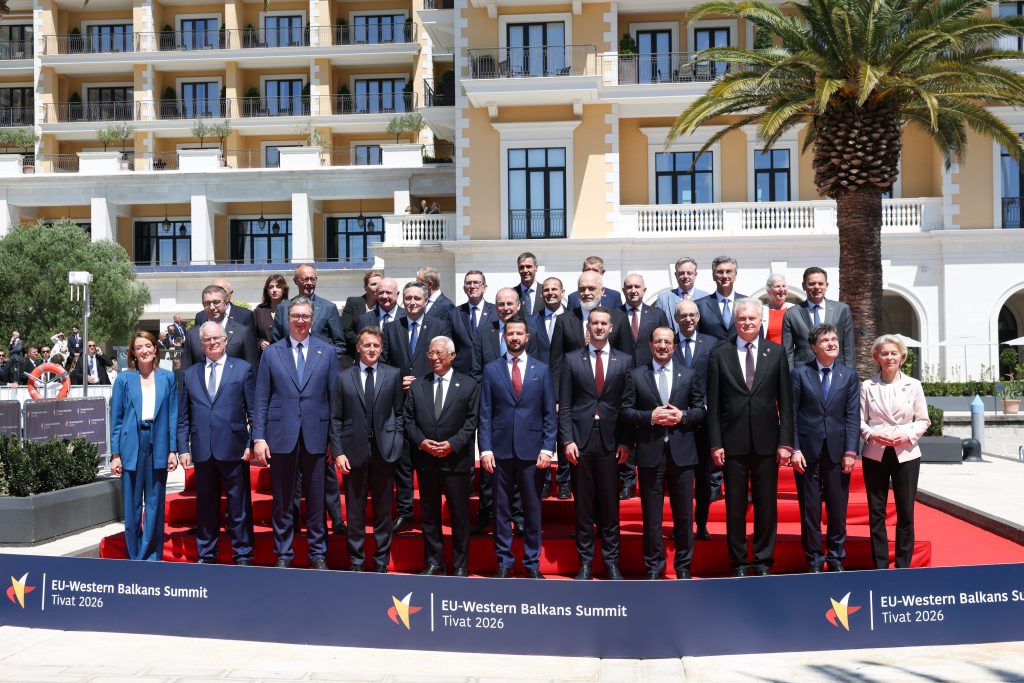
The Western Balkans demonstrate what happens when the promise of integration remains politically powerful but temporally uncertain. For more than two decades, the region has been told that its future lies inside the European Union. That prospect has contributed to significant reforms and cooperation, but the slow pace of accession has also created frustration. In countries where unresolved ethnic tensions, contested statehood and weak institutions remain important political realities, prolonged uncertainty can create opportunities for nationalist mobilisation and democratic backsliding.
The strategic danger is not necessarily that these states will suddenly abandon Europe. It is that they can become politically fragmented environments in which multiple external actors compete for influence while the EU gradually loses its ability to shape domestic reform. Russia, China, Turkey and Gulf states have all developed different forms of economic, political or diplomatic engagement across the region. Their involvement varies considerably and should not automatically be interpreted as hostile to European interests. Nevertheless, it demonstrates that candidate countries possess alternatives and that Brussels cannot assume European integration will remain indefinitely attractive regardless of how long accession takes.
The EU’s strongest geopolitical advantage remains something its competitors cannot easily reproduce: the possibility of membership in one of the world’s largest economic and political unions. But this advantage exists only if membership remains achievable. A door that is theoretically open but practically unreachable eventually stops functioning as an incentive.
Ukraine Changes the Meaning of Enlargement
Ukraine transforms the debate because its potential accession would represent far more than another enlargement round. It would integrate a large European state whose institutions, economy and society have been fundamentally shaped by a major war. Reconstruction, democratic consolidation, security reform and European integration will therefore unfold simultaneously rather than sequentially.
This creates challenges the European Union has never confronted on comparable scale. Ukraine will require enormous reconstruction investment while simultaneously strengthening institutions capable of managing those resources transparently. Wartime governance practices will eventually need to transition toward peacetime democratic institutions. Millions of displaced Ukrainians will face decisions about whether to return. Veterans will need social and economic reintegration, while communities damaged by war will require reconstruction and reconciliation. Agricultural integration could create significant political tensions inside the EU, particularly in member states whose farmers fear competition from Ukrainian production.
These are not arguments against Ukrainian membership. They demonstrate why accession must be understood as part of peacebuilding rather than as a bureaucratic process beginning after peace has already been achieved. The institutions constructed during reconstruction will influence whether post-war Ukraine develops into a resilient European democracy or remains vulnerable to corruption, political fragmentation and renewed external pressure. European integration can provide the long-term institutional framework within which reconstruction takes place.
Peace Agreements Cannot Build Peace Alone
The Ukrainian case also illustrates a broader weakness in international conflict management. Diplomacy naturally concentrates on stopping violence. Ceasefires, territorial arrangements, security guarantees, prisoner exchanges and monitoring mechanisms dominate peace negotiations because ending immediate bloodshed is the first priority. Yet ending warfare and constructing sustainable peace are fundamentally different processes.
A ceasefire can stop military operations without resolving corruption, weak institutions, economic devastation, demographic displacement or political polarisation. Communities can remain divided by incompatible narratives of the conflict. Refugees may not return. Economic opportunities may remain concentrated in particular regions or social groups. Wartime political structures can become permanent. If these problems remain unresolved, a formal peace settlement can coexist with profound structural instability.
European integration offers something that traditional peace agreements cannot: a long-term institutional destination. It can embed countries inside common economic, legal and political structures extending far beyond the immediate conflict settlement. This changes incentives. Political actors considering confrontation must account for the economic and institutional costs of destabilising relationships that increasingly connect their societies to the wider European system. Integration cannot guarantee peace, but it can make renewed conflict progressively more expensive.
Gradual Integration Could Transform the Accession Process
The EU therefore needs to reconsider the binary structure of enlargement. Under the traditional model, countries spend years adopting European standards while remaining outside many of the practical benefits of membership. This creates a politically dangerous waiting period during which governments absorb the costs of reform while citizens experience relatively few tangible benefits.
A more sustainable model would make accession progressively visible in everyday life. Candidate countries that meet specific benchmarks could receive deeper access to European markets, transportation networks, energy systems, educational programmes, digital services and selected EU initiatives before formal membership. Economic integration could advance alongside institutional integration, while successful reforms would produce immediate benefits rather than promises of benefits years later.
Such an approach would transform accession from a waiting room into a staircase. Each significant institutional reform would move the country closer to practical integration. Citizens could see concrete consequences from European alignment, while political elites would face greater costs if they attempted to reverse reforms. The process would retain conditionality but make that conditionality politically sustainable.
The critical principle is reversibility. Governments should receive benefits when reforms succeed, but deliberate democratic backsliding should produce consequences. Conditionality that operates only in one direction eventually ceases to function as conditionality. The credibility of European integration depends on rewarding genuine progress while demonstrating that membership standards cannot be treated as temporary obstacles to be bypassed once political advantages have been secured.
Economic Development Is Part of Democratic Security
Institutional reform cannot be sustained indefinitely without economic legitimacy. Citizens may support difficult political transformation when they believe it will improve their future, but enthusiasm declines if wages stagnate, public services remain weak and younger generations continue leaving their countries in search of opportunities elsewhere.
This is particularly important in Moldova and the Western Balkans, where demographic decline and migration can undermine the long-term foundations of governance. When educated young people leave in large numbers, states lose taxpayers, professionals, entrepreneurs and future political leaders. Local economies weaken, while societies become increasingly dependent on remittances. Political frustration can then create fertile conditions for populism and anti-establishment movements.
European investment should therefore be treated as part of democratic resilience. Infrastructure, employment, access to markets and business development can strengthen the social foundations upon which stable institutions depend. Yet investment must be connected to governance. Large flows of European money entering weak institutional systems can create new opportunities for corruption, politically connected procurement and oligarchic influence. Economic assistance contributes to peacebuilding only when transparency and institutional accountability develop alongside it.
Rule of Law Remains the Decisive Test
Among all accession requirements, rule-of-law reform is likely to remain the most difficult because legislation can change faster than political behaviour. A parliament can approve an anti-corruption law in months. Building prosecutors, courts and oversight institutions capable of applying that law independently can require years.
This is where European integration confronts entrenched domestic interests most directly. Independent prosecutors can threaten political elites. Transparent procurement can threaten businesses benefiting from privileged access to state contracts. Independent courts can weaken the ability of governments to reward supporters or punish opponents. Media freedom can expose corruption that political leaders would prefer to keep hidden.
For the EU, the challenge is therefore not simply measuring how many laws have been adopted. It is determining whether institutions actually function independently. Accession should increasingly evaluate outcomes: whether corruption cases are investigated regardless of political affiliation, whether courts can rule against governments without retaliation, whether public procurement is genuinely competitive and whether journalists and civil-society organisations can operate without intimidation.
Governance reform is ultimately about altering the distribution of power inside a state. That is why it is difficult—and why it matters for peace.
Democratic Institutions Are Critical Infrastructure
The increasing threat of foreign political interference requires another conceptual shift. Europe has become accustomed to describing energy grids, telecommunications networks, ports and digital systems as critical infrastructure requiring protection. Democratic institutions deserve similar treatment.
Elections can be attacked through cyber operations, illegal financing, disinformation and coordinated manipulation of the information environment. Political parties can become channels for external influence. Social divisions can be deliberately amplified. None of these activities requires conventional military force, yet collectively they can change the strategic orientation of a country.
Candidate states are particularly vulnerable because institutional trust may already be fragile. European support should therefore focus not only on responding to interference after elections but on strengthening democratic systems beforehand. Electoral commissions need technical and cybersecurity capabilities. Political financing must become transparent. Independent journalism requires legal protection. Governments need mechanisms for identifying coordinated foreign manipulation without converting legitimate political disagreement into a security offence.
The objective is not to insulate democracies from political competition. It is to ensure that competition remains genuinely democratic.
Unresolved Conflicts Cannot Become a Permanent Veto
Moldova and Ukraine raise another fundamental question: can countries join the European Union while parts of their internationally recognised territory remain outside government control? The traditional enlargement model was not designed for this problem.
Making complete territorial settlement an absolute prerequisite for European integration could create a dangerous strategic incentive. An external power capable of sustaining a separatist territory or military occupation would effectively acquire a veto over the victim state’s European future. Frozen conflicts could therefore become instruments for permanently blocking enlargement.
Europe will need a more sophisticated doctrine. Territorial disputes cannot simply be ignored because EU law, border management, economic regulation and political representation require clarity. Yet aggression should not be rewarded by allowing occupation to determine the geopolitical future of the rest of a country.
This issue will become increasingly important as Ukraine moves through the accession process. Europe needs mechanisms capable of advancing integration while maintaining the legal position that occupied territories remain part of the candidate state. Otherwise, unresolved conflict could become an institutional weapon against European enlargement.
Enlargement Cannot Replace Hard Security
At the same time, enlargement should not be asked to perform functions it cannot fulfil. Governance reform cannot stop missiles, economic integration cannot independently deter invasion and democratic resilience cannot substitute for military capability.
Peacebuilding and hard security must therefore reinforce each other. Military deterrence protects the political space in which institutions can function, while strong institutions make states more difficult to destabilise through non-military methods. NATO, national defence structures and EU integration perform different but complementary roles.
This distinction is especially important for countries such as Moldova, which do not possess NATO’s collective-defence guarantee. European support can strengthen institutional resilience, border management, cybersecurity and the ability of state structures to resist coercion. But policymakers must remain clear about the limits of these instruments. Institutional resilience reduces vulnerability; it does not eliminate conventional military risk.
The EU Is Already a Geopolitical Institution
The European Union has historically been reluctant to describe itself as a traditional geopolitical power because it lacks many characteristics associated with conventional great powers. Its strongest instruments are markets, regulation, financial assistance, trade agreements and institutional conditionality rather than military force.
Yet contemporary geopolitics increasingly operates through precisely these instruments. Energy networks influence sovereignty. Infrastructure creates dependencies. Trade agreements shape strategic alignment. Financial systems enforce sanctions. Digital standards influence technological ecosystems. Enlargement determines the geographical boundaries of Europe’s political and economic order.
The EU therefore does not need to reproduce the geopolitical model of traditional military powers. Its comparative advantage lies elsewhere: it can transform the domestic institutions of states that voluntarily seek deeper integration. The attraction of membership gives Brussels leverage that military coercion cannot easily reproduce.
The strategic question is whether Europe can use this power quickly enough to shape political environments before competing actors exploit their vulnerabilities.
The Danger of a Permanent European Waiting Room
Gradual integration nevertheless contains a danger. If candidate countries receive access to European markets, align with EU foreign policy, adopt European regulations and contribute increasingly to European security without eventually gaining political membership, Europe could create a permanent second tier.
Such an arrangement might appear practical in the short term, but it would become politically unstable. Countries would be expected to follow rules they had limited ability to shape. Citizens could conclude that Europe wanted their economic and strategic alignment without granting equal political participation.
Gradual integration must therefore remain a pathway rather than a substitute for membership. Countries that fulfil the criteria must eventually be admitted. Otherwise, the EU risks replacing enlargement with a geopolitical buffer zone—precisely the type of strategic ambiguity that integration is supposed to overcome.
Conclusion: Europe’s Next Peace Architecture
The future of EU enlargement should not be understood merely through the question of how many countries the Union can absorb. The deeper issue concerns what kind of political order Europe intends to build around itself. Between the existing EU and Russia lies a region containing states whose stability, democratic resilience and geopolitical orientation will profoundly influence European security for decades.
Leaving these countries indefinitely in strategic ambiguity carries significant risks. Weak institutions create opportunities for external manipulation. Economic stagnation encourages migration and political dissatisfaction. Unresolved conflicts provide foreign powers with leverage. Democratic disillusionment strengthens movements that question European integration itself. Enlargement cannot eliminate these vulnerabilities, but a credible integration process can fundamentally change the incentives surrounding them.
For The European Institute for Peace and Governance (EIPG), the central lesson is that peacebuilding in twenty-first-century Europe must begin before formal peace agreements and continue long after them. It requires institutions capable of resisting political capture, economies capable of providing citizens with credible futures, democratic systems resilient against interference and regional frameworks that make cooperation more rewarding than confrontation. European integration can provide all four, but only if its political promises remain credible.
The EU therefore needs an enlargement strategy designed not merely for the day countries become members but for the potentially long period before membership. Gradual economic integration, institutional reform, democratic protection, reconstruction, infrastructure investment and security assistance should operate as components of a single stabilisation strategy. Successful reforms must produce visible benefits, while democratic regression must carry tangible consequences.
The ultimate strength of enlargement lies in its ability to alter political expectations. A country moving credibly toward European integration begins reorganising its institutions, economy and strategic relationships around a different future. Businesses invest according to that future, students educate themselves within it, governments reform institutions to participate in it and neighbouring states gradually develop interests in its stability. Integration creates relationships that make conflict progressively more expensive and cooperation progressively more valuable.
Europe’s next peace project may therefore not begin with a treaty signed after a war. It may begin with the slower and less visible work of building institutions, connecting economies and giving vulnerable societies a credible political destination.
The real strategic value of enlargement is not simply that it expands the European Union. It is that, when the process remains credible, it can expand the part of Europe in which democratic stability becomes stronger, external coercion becomes harder and renewed conflict becomes increasingly costly.