As every autumn, the European Commission just published the 2025 Enlargement Package, taking stock of the EU’s advances in the dossier and EU candidates’ reform progress. This year’s report on Serbia marks a notable shift in tone. It is sharper, more sceptical and less optimistic, reflecting the country’s democratic backsliding and growing estrangement from Brussels.
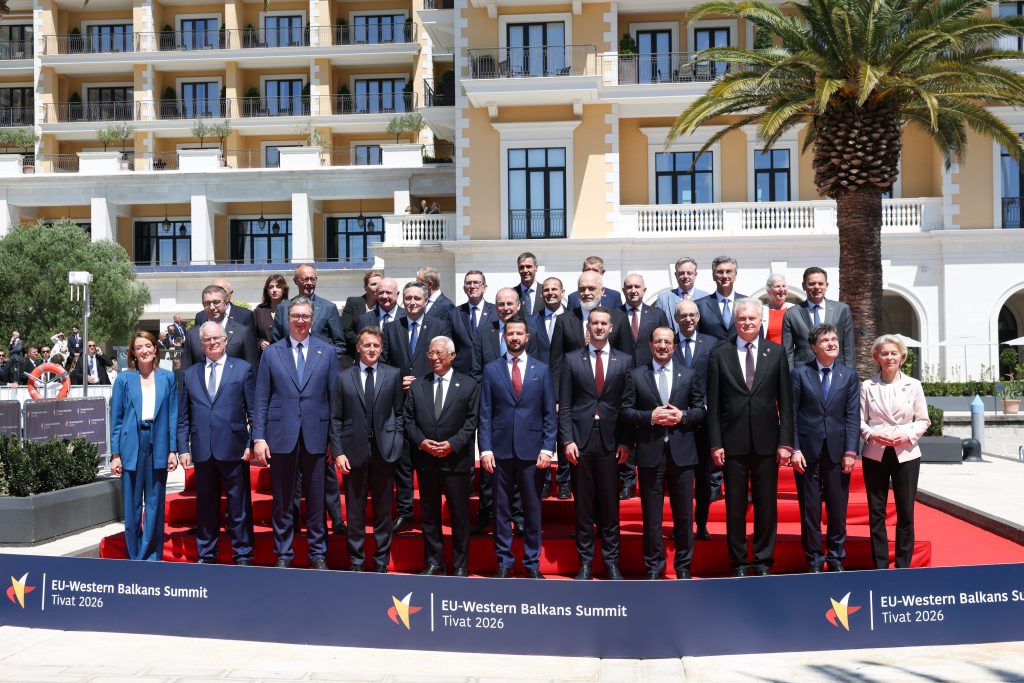
The change was already visible during Commission President Ursula von der Leyen’s recent visit to the Western Balkans. Last year’s praise for President Aleksandar Vučić for his committment to rule of law and democratic reforms and of Serbia as one of the most advanced countries in the accession process has been replaced with a less enthusiastic message: “We need to see progress on the rule of law, the electoral framework and media freedom”. Likewise, earlier suggestions that Serbia’s actions were broadly aligned with its stated commitments – “you have shown that deeds follow your words” – have turned to a directive: “We look to Serbia to show commitment, in deeds as well as in words”.
The Commission also criticises the persistent anti-EU rhetoric used by Serbian political leaders and echoed by aligned media, noting that this contradicts Serbia’s declared strategic goal of EU membership.
Targets are one thing, delivery another
Like Montenegro and Albania, Serbia has set a target date to meet its accession criteria. However, while the Commission states that Montenegro and Albania are on track to meet their accession negotiation closing targets of 2026 and 2027, respectively, it does not extend the same assessment to Serbia’s end-2026 target. Instead, the report notes that the Serbian government is yet to show genuine political will.
While Cluster 3 (competitiveness and inclusive growth) is technically ready to open, the Commission reminds that the overall pace of negotiations depends on rule of law reforms. The report notes that implementation of reforms has slowed significantly, with stagnation or backsliding in key areas such as judicial independence and freedom of expression. All this implies that, under the current circumstances, Serbia will make no progress.
By contrast, the Commission acknowledges a more balanced reform trajectory in Montenegro and Albania.
To advance, the Commission urges Serbia to demonstrate tangible results in fighting corruption, strengthening the rule of law (including judiciary independence), media freedom, electoral reform, protecting civil space and countering disinformation and foreign influence operations.
One year after the Novi Sad tragedy, a deepening crisis
The Package, published on 4 November, came just after the first anniversary of the tragic collapse of a railway station roof in Novi Sad, which triggered the largest anti-government protests in Serbia’s recent memory. These are ongoing.
Over the past year, Serbia’s political crisis has intensified, and almost 60% of Serbian citizens now support the protests. Demonstrations are often met with repression and police brutality, and the civic space continues to shrink, aggravating the trend of the past years.
The report recognises the increasingly hostile environment for civil society. Organisations working on rule of law have faced smear campaigns, including by high-level officials, leading some CSOs to suspend cooperation with authorities on EU-related matters. This has damaged the inclusiveness of the accession process itself.
During this period, the EU’s public response has been muted. This is nothing new. Brussels has long been criticised for overlooking democratic deterioration in Serbia, with leaders at times offering high-profile public support for Vučić. While international indicators rang alarms about Serbia’s deteriorating democracy over the past years, Ursula von der Leyen has repeatedly praised Vučić for rule of law reforms. This has eroded trust in the EU among parts of the Serbian public.
Changing tone is not enough
The change of tone in the Commission’s report is good news. However, a critical 100-page report won’t reach the public or shift perception if visual messaging remains conciliatory. A photograph of a handshake will still speak louder than any policy assessment.
To have real impact, the Commission’s change of tone must be translated into public communications and engagement strategies with the Serbian leadership. Only then can the EU begin to rebuild credibility and encourage meaningful reform.