Saudi Arabia’s ambitious Vision 2030 is facing growing pressure as rising security challenges, increasing military spending, and setbacks affecting major megaprojects raise questions about the sustainability of the Kingdom’s transformation agenda. This report examines whether Riyadh can balance economic modernization with the demands of long-term stability in an increasingly volatile region.
The European Institute for Peace and Governance (EIPG)
Saudi Arabia is no longer judged solely by its ability to build smart cities, launch mega-projects, or deliver on the ambitious targets of Vision 2030. After years of unprecedented economic and social transformation, a new set of questions has begun to emerge among policymakers and observers alike: Is economic modernization still the Kingdom’s primary priority, or are concerns about security and internal stability gradually reclaiming their traditional place at the top of the national agenda?
These questions arise at a time when Saudi Arabia faces a complex mix of challenges, ranging from growing regional tensions in the Gulf and rising military expenditures to the reassessment of some flagship Vision 2030 projects and an expanding debate over the relationship between political authority and the Kingdom’s security institutions.
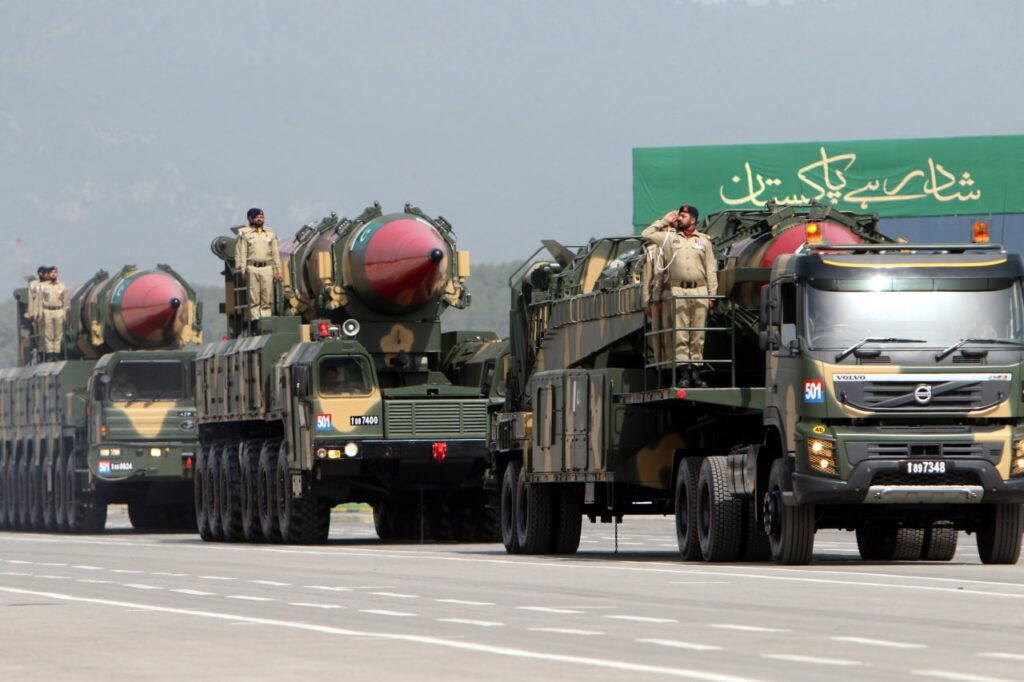
In recent months, reports about the presence of foreign military personnel in Saudi Arabia have resurfaced, fueled by unverified claims regarding the deployment of additional forces from Asian countries for security and military-related missions. While no independent evidence has substantiated the figures being circulated, what remains undeniable is the long-standing security partnership between Riyadh and Islamabad—a relationship that spans decades and encompasses military training, defense cooperation, and strategic coordination.
The significance of these developments lies not in the number of foreign troops themselves, but in the broader questions they raise about Saudi Arabia’s security model and the evolving relationship between rapid economic transformation and the requirements of political and internal stability in a state undergoing one of the most ambitious processes of power restructuring in its modern history.
According to Andreas Krieg, a specialist in Gulf security and defense affairs, Saudi Arabia has historically relied on a system that distributes military and security power across multiple institutions rather than concentrating coercive capabilities within a single force. This approach, he argues, has been shaped not only by military considerations but also by concerns related to political stability and the management of internal balances of power.
Security Before Development?
In recent months, unverified reports have circulated claiming that large numbers of foreign troops have been deployed to Saudi Arabia, including forces from Pakistan and Bangladesh. While no independent evidence or official statements have confirmed these figures, what is beyond dispute is the long-standing military partnership between Riyadh and Islamabad, a relationship that spans decades and includes training, coordination, and defense cooperation.
In April, international media reports confirmed the deployment of Pakistani military personnel and fighter aircraft as part of enhanced defense cooperation with the Kingdom amid rising regional tensions. For many observers, however, the significance of these developments lies less in the number of troops involved than in the questions they raise about Saudi Arabia’s priorities at this stage.
The Kingdom that launched one of the world’s most ambitious economic transformation programs now finds itself operating in an increasingly volatile regional environment. The war in Yemen remains unresolved, tensions with Iran persist despite periods of de-escalation, and the security of energy infrastructure and maritime routes in the Gulf has once again become a central strategic concern.
In this context, the key question is no longer limited to Saudi Arabia’s ability to deliver projects such as NEOM or The Line. It is increasingly about its ability to maintain the internal stability and security environment upon which these projects ultimately depend.
The debate is further amplified by the Kingdom’s demographic realities. According to Saudi Arabia’s General Authority for Statistics, the unemployment rate among Saudi nationals stood at 7 percent in the fourth quarter of 2024. Among Saudi males aged 15–24, unemployment reached 12.2 percent, while the figure for Saudi females in the same age group stood at 19.9 percent.
These figures raise questions that go beyond unemployment or military recruitment alone. If Saudi Arabia possesses substantial financial resources and a large youth population, why does the discussion about reliance on external security partners continue to surface? Is this merely a matter of operational and military requirements, or does it reflect deeper characteristics of the political and security system that has evolved within the Kingdom over decades?
To answer these questions, it is necessary to examine how the architecture of power was constructed within the modern Saudi state.
The Architecture of Power in the Kingdom
To understand the ongoing debate surrounding security and the military’s role in Saudi Arabia, it is necessary to examine how the Kingdom’s power institutions were constructed over the past decades.
Unlike many regional states that relied on strong, centralized armies, Saudi Arabia developed a different model based on distributing coercive power across multiple military and security institutions, including the armed forces, the Ministry of Interior, the National Guard, and various security agencies. This structure was designed to prevent any single institution from monopolizing the means of force.
According to Gulf security specialist Andreas Krieg, this model was not solely about military effectiveness. Rather, it formed part of a broader mechanism for maintaining political stability within the Kingdom, with military and security influence deliberately distributed among different institutions to prevent the emergence of an autonomous power center capable of challenging the political order.
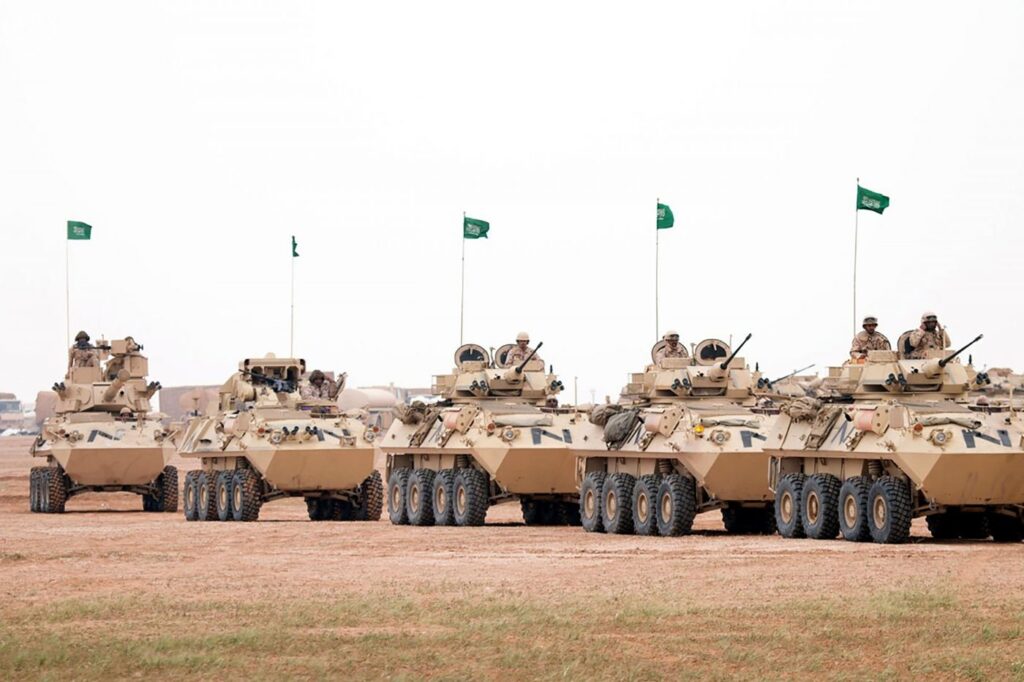
Historically, the Saudi National Guard played a central role in this arrangement. While the armed forces were primarily tasked with external defense, the National Guard evolved as a parallel force with its own command structure and institutional identity, reinforcing the balance between the Kingdom’s various security and military bodies.
This equation, however, has undergone significant changes in recent years with the rise of Crown Prince Mohammed bin Salman and the launch of a far-reaching process of institutional restructuring and political centralization.
From the removal of Crown Prince Mohammed bin Nayef in 2017, to the high-profile Ritz-Carlton detentions, and the restructuring of several key state institutions, Saudi Arabia entered an unprecedented phase of concentrating executive and political authority in the hands of the Crown Prince.
For many analysts, these developments represented more than a series of administrative reforms. They were part of a broader effort to reshape the balance of power within the Saudi state and redefine the relationship between traditional institutions and a newly centralized decision-making structure.
Yemen: A Test of Saudi Power
If the Kingdom’s security architecture was historically designed to preserve internal balance and political stability, the war in Yemen became the first major test of its ability to manage a prolonged and open-ended conflict.
When Saudi Arabia launched Operation Decisive Storm in 2015, its stated objective was to restore Yemen’s internationally recognized government and prevent the expansion of Iranian-backed Houthi influence. Yet after years of military operations and substantial expenditures, Riyadh was unable to achieve a decisive victory commensurate with the scale of the resources committed to the war.
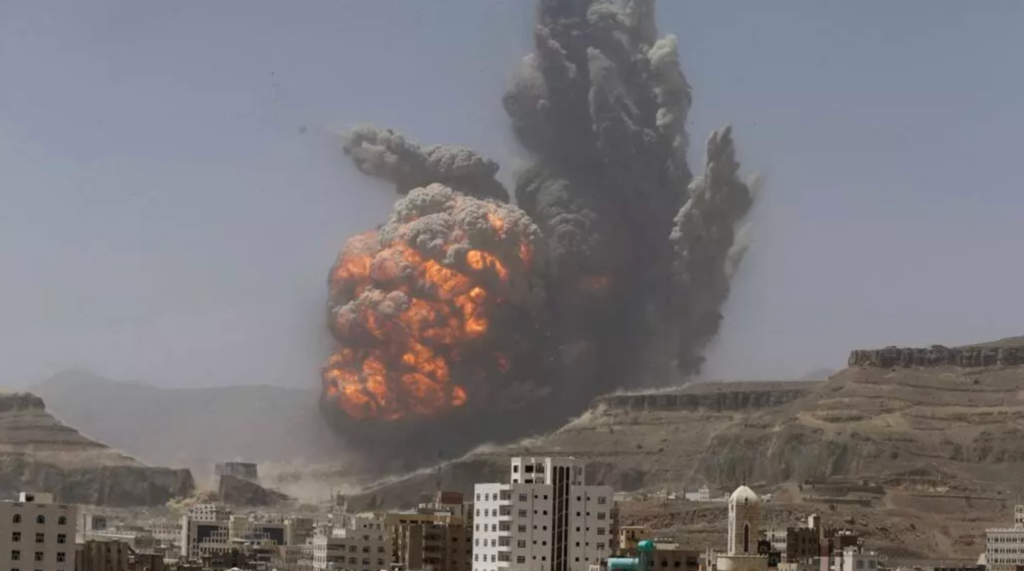
Throughout the conflict, Saudi oil facilities, airports, and military bases were repeatedly targeted by missiles and drones, while the Kingdom’s southern border evolved into a persistent arena of military and security attrition.
At the same time, Saudi Arabia increasingly relied on local Yemeni formations and allied forces to conduct significant portions of ground operations, while its most effective contribution remained concentrated in air power, air defense systems, intelligence capabilities, and logistical support.
This does not necessarily indicate a weakness in Saudi military capabilities. Rather, it reflects the nature of the military model that has evolved within the Kingdom over decades, one that prioritizes technological superiority, air power, and advanced defense systems over the development of a large, combat-experienced ground force.
Several Gulf security analysts argue that the war exposed a gap between the scale of Saudi military spending and the ability to translate that spending into decisive battlefield outcomes, particularly in irregular conflicts characterized by prolonged attrition, local alliances, and complex political dynamics.
For decision-makers in Riyadh, Yemen was not merely a confrontation with the Houthis. It became a strategic experience that revived deeper questions about the structure of the Kingdom’s military institutions, the relationship between internal stability and national security, and the requirements for building a force capable of addressing an increasingly complex regional environment.
Mohammed bin Salman and the Reshaping of Power
The consequences of the Yemen war coincided with unprecedented transformations within Saudi Arabia’s political structure itself. Since 2017, the Kingdom has undergone a far-reaching process of redistributing centers of influence within the state, alongside the rise of Mohammed bin Salman as the most powerful figure in the Saudi political system.
These changes began with the removal of then–Crown Prince Mohammed bin Nayef, widely regarded as one of the principal architects of Saudi Arabia’s modern security apparatus. This was followed by a series of measures that included the restructuring of key state institutions and the launch of the high-profile Ritz-Carlton anti-corruption campaign, which targeted princes, business leaders, and former officials.
For the Saudi leadership, these steps were presented as part of a reform agenda aimed at combating corruption and accelerating the modernization of the state. For many analysts and observers, however, they also marked a broader reconfiguration of traditional power balances within both the ruling family and state institutions.
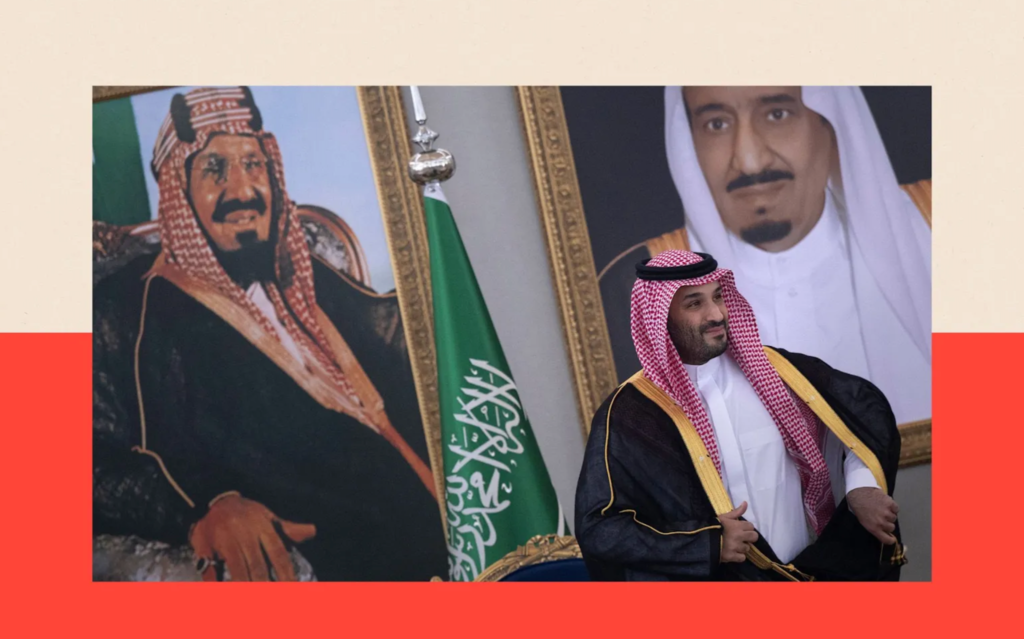
According to political economist Steffen Hertog, the transformations witnessed in Saudi Arabia over the past decade extended far beyond economic and social reforms. They also involved a fundamental restructuring of the relationship between state institutions and the political center of decision-making, resulting in an unprecedented concentration of executive authority in modern Saudi history.
At the same time, Mohammed bin Salman launched Vision 2030 as the framework that would guide the Kingdom’s economic and social transformation. The initiative was presented as a roadmap for rebuilding the Saudi economy, reducing dependence on oil revenues, creating employment opportunities for young Saudis, and attracting global investment.
Yet this ambitious project also placed the Saudi leadership before a complex equation: the more centralized political decision-making became, the greater the direct responsibility of the leadership for the success or failure of the flagship projects associated with the Vision.
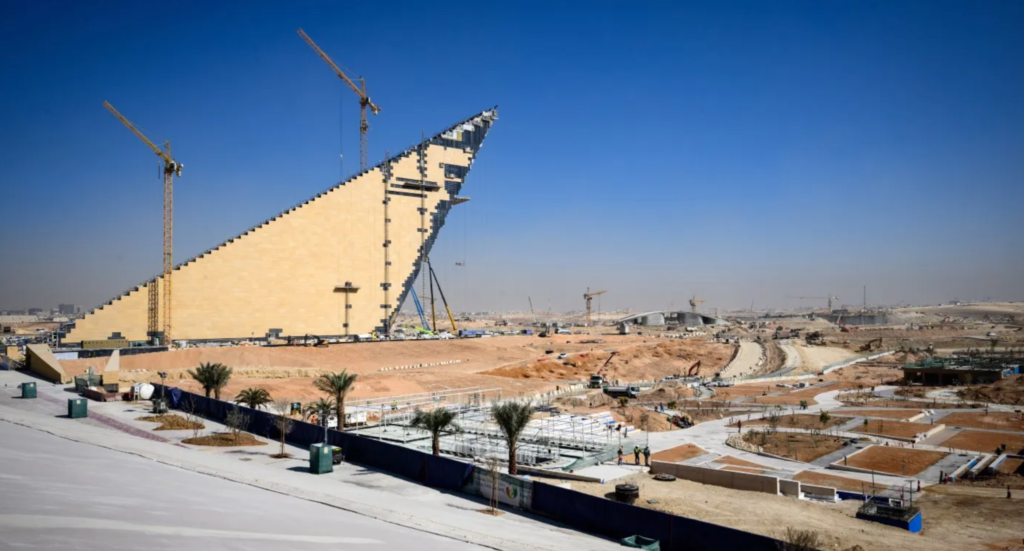
Over time, projects such as NEOM, The Line, and Trojena ceased to be merely development initiatives. Instead, they became closely tied to the political and personal stake that the Crown Prince has placed on the Kingdom’s future and its economic trajectory over the coming decades.
From NEOM to Trojena: When Ambition Collides with Reality
Since its launch in 2016, Vision 2030 has represented the most ambitious economic and social transformation project in the history of modern Saudi Arabia. NEOM, in particular, was never intended to be merely a new city; it became the flagship symbol of the Vision itself and the clearest expression of Saudi Arabia’s ambition to redefine development, urban planning, and economic modernization in the region.
Over time, however, growing signs began to emerge of a widening gap between declared ambitions and implementation realities.
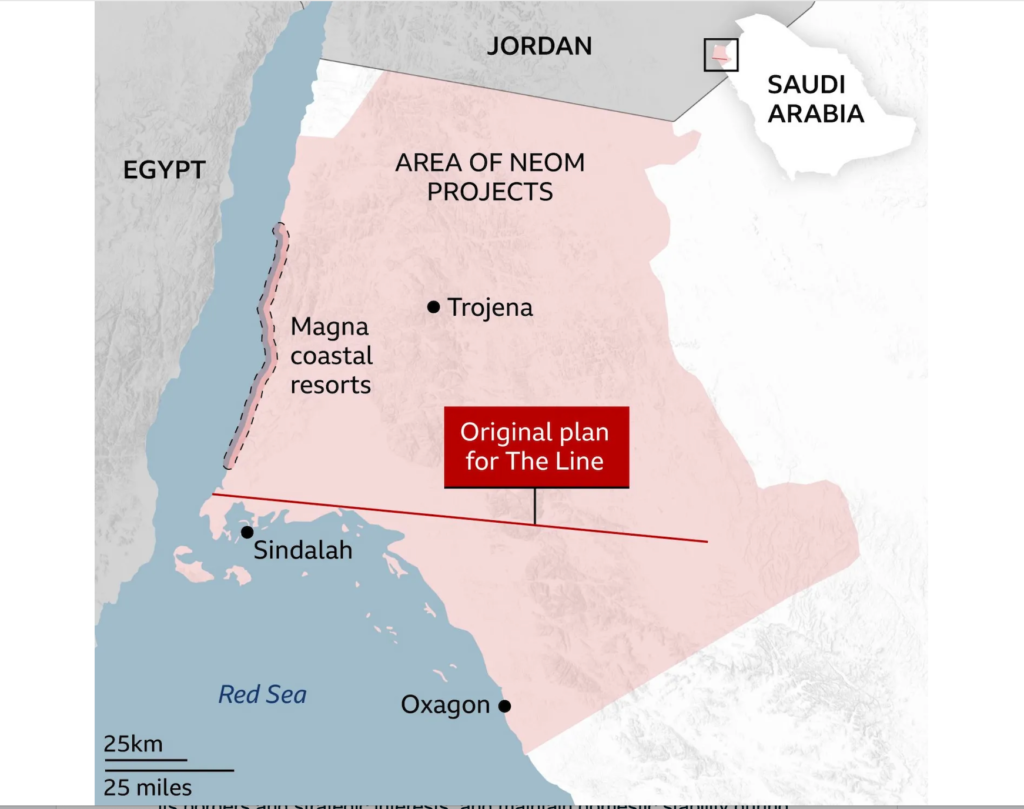
The most prominent example is The Line. According to a Financial Times investigation, the project initially began as a relatively conventional urban development plan before evolving into a far more ambitious concept: a 170-kilometer linear city consisting of two parallel mirrored structures rising approximately 500 meters above the desert landscape.

The newspaper reported that several key features of the project, including its final design and overall dimensions, were introduced following direct guidance from Crown Prince Mohammed bin Salman during the planning process.
Yet the challenge was not merely architectural, it was also financial.
According to the same report, internal studies estimated the cost of The Line at approximately $1.6 trillion by the end of 2021. Subsequent projections reportedly increased that figure to nearly $4.5 trillion—an amount approaching the annual gross domestic product of Germany.
The Financial Times also reported that some major decisions concerning the project were made on the basis of conceptual renderings and digital visualizations before the completion of detailed engineering studies necessary to assess its practical feasibility.
Nor were these challenges limited to The Line alone.
In 2024, Bloomberg reported that Saudi authorities significantly scaled back expectations for the project. The projected population target for 2030 was reduced from approximately 1.5 million residents to fewer than 300,000, while estimates suggested that only a few kilometers of the planned 170-kilometer city might be completed by that date.
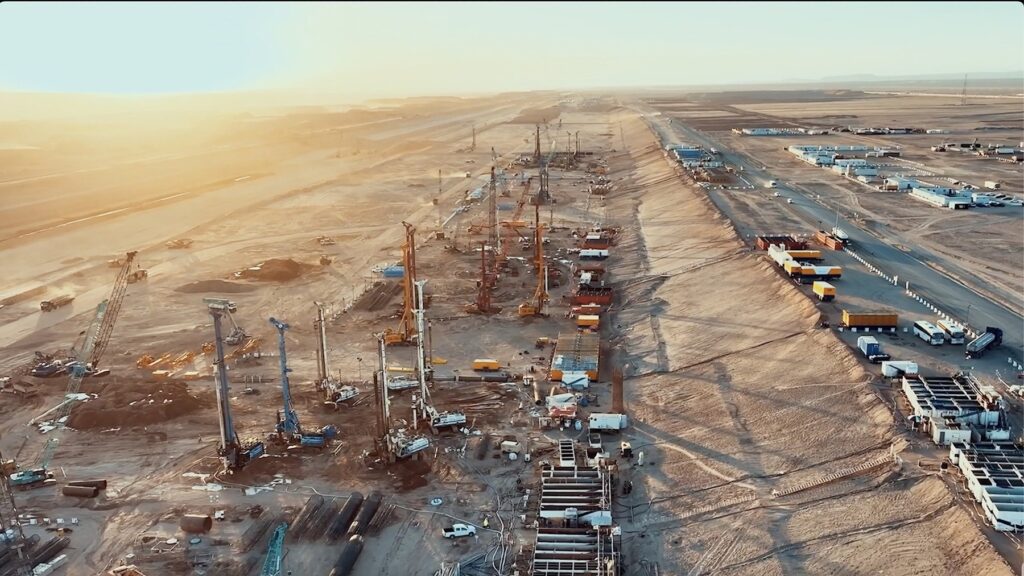
Meanwhile, Trojena the mountain resort designed to host winter sports within the NEOM development and promoted as a symbol of the Kingdom’s capacity to deliver unprecedented megaprojects—also encountered significant setbacks. Plans associated with the project underwent repeated revisions and reassessments, while concerns emerged regarding timelines, costs, and overall feasibility.
For many experts, the significance of these developments lies not in the difficulties facing any single project, but in what they reveal about the limits of a development model that seeks to launch multiple megaprojects at a pace that may exceed the ability of institutions, labor markets, and administrative systems to absorb and execute them effectively.
An Economy Under Pressure
The challenges facing Saudi Arabia’s flagship projects are no longer purely engineering or administrative in nature. Increasingly, they are shaped by the broader economic and geopolitical environment in which the Kingdom operates.
Over the past decade, Vision 2030 has been built on a central assumption: that oil revenues and fiscal surpluses would provide the resources necessary to finance large-scale transformation projects while supporting economic diversification and attracting foreign investment.
Yet rising regional tensions have introduced a new variable into that equation: security.
According to data reported by Reuters, Saudi Arabia recorded a fiscal deficit of approximately 125.7 billion Saudi riyals ($33.5 billion) in 2026, alongside a 20 percent increase in government spending and a roughly 26 percent rise in military expenditure.
Reuters linked these developments to growing regional instability, higher security and defense costs, pressures in global energy markets, and concerns over potential disruptions to maritime trade routes through the Gulf and the Strait of Hormuz.
These figures do not suggest a conventional financial crisis. Saudi Arabia continues to possess vast sovereign assets, substantial financial reserves, and broad access to international capital markets. Their significance lies elsewhere: they point to a gradual shift in spending priorities.
Every riyal allocated to defense and security is a riyal that cannot be invested in economic transformation, infrastructure, education, or human capital development. As the cost of managing an increasingly complex security environment rises, so too does the pressure on the economic model underpinning Vision 2030.
Political economists have long argued that the success of large-scale transformation programs depends not only on the availability of capital, but also on long-term stability and predictability. Megaprojects require sustained financing, investor confidence, and institutional continuity over decades, not merely periods of elevated spending.
In this context, economic and security challenges appear more interconnected than ever. The success of Vision 2030 is no longer determined solely by Saudi Arabia’s ability to build new cities or launch ambitious projects, but also by its capacity to maintain a delicate balance between security and stability on one hand, and economic transformation on the other.
Imported Security or a Redefinition of Security?
At first glance, military cooperation with Pakistan or the use of allied forces in regional conflicts may appear to be a routine feature of defense policy, practiced by many states around the world. In the Saudi case, however, the debate carries broader implications that touch upon the nature of the state itself and the way power is organized and managed within it.
Over the past decade, Saudi Arabia has relied in certain conflict zones particularly in Yemen on local Yemeni formations, Sudanese forces, and regional partners to participate in ground operations. Meanwhile, the Kingdom’s most visible contribution remained concentrated in air power, intelligence capabilities, logistics, and advanced military technology.
Regardless of the accuracy of reports concerning the number of foreign personnel currently present in the Kingdom, one fact remains clear: cooperation with external military partners has long been a consistent component of Saudi Arabia’s security strategy.
Yet the question raised by many analysts is not whether such cooperation exists, but rather what it reveals about the Kingdom’s broader security model. Does it reflect a practical need for specialized expertise and operational flexibility? Or is it part of a larger framework that favors diversified and overlapping security arrangements over the development of a large and autonomous national ground force?
Some Gulf scholars argue that Saudi Arabia’s political history has played a significant role in shaping this approach. Maintaining equilibrium among multiple military and security institutions has historically been viewed as a mechanism for preserving stability and preventing the concentration of coercive power within a single institution.
As regional tensions intensify and the costs of defense and security continue to rise, however, this model faces a new test. Saudi Arabia must simultaneously safeguard its ambitious economic projects, secure its borders and strategic interests, and maintain domestic stability during a period of rapid economic and social transformation.
In this context, the central question may not be whether Saudi Arabia is “importing security,” but whether it is redefining the very concept of security itself. After years in which economic transformation, investment, and modernization dominated public discourse, considerations of stability, risk management, and strategic resilience appear to be reclaiming a more prominent place in state planning.
This shift does not necessarily signal the failure or retreat of Vision 2030. Rather, it suggests that the success of Saudi Arabia’s economic transformation is becoming increasingly dependent on the state’s ability to navigate a more complex regional security environment while maintaining a delicate balance between ambitious development goals and the imperatives of long-term stability.
Beyond Vision 2030
Saudi Arabia continues to possess substantial financial resources, significant institutional capacity, and a regional position that makes it one of the most influential states in the Middle East. Discussions about delays in certain megaprojects or rising military expenditures do not imply that the Kingdom is facing an existential crisis or standing on the brink of political or economic collapse.
What recent years have revealed, however, is that the central challenge facing Saudi Arabia is no longer merely financial or technical.
The megaprojects launched under the banner of Vision 2030 have evolved beyond development initiatives into a broader test of the state’s ability to manage a complex balance between economic ambition, political stability, and regional security. At the same time, issues such as the structure of military institutions, reliance on foreign expertise and external security partnerships, and the evolving relationship between the state and society have become part of a wider debate about the future of the Saudi model itself.
The Saudi leadership has succeeded in reshaping both the economy and the social landscape at a pace unprecedented in the Kingdom’s modern history. Yet the question that will determine the success of the next phase may not be whether another megacity is completed or another flagship project is launched.
The more consequential question is whether Saudi Arabia can build a long-term model that combines economic diversification, strong national institutions, and sustainable political stability within a region that continues to grow more volatile year after year.
Ultimately, the strength of nations is measured not only by what they build, but by their ability to preserve and sustain those achievements when circumstances change and pressures intensify.