By The European Institute for Peace and Governance (EIPG)
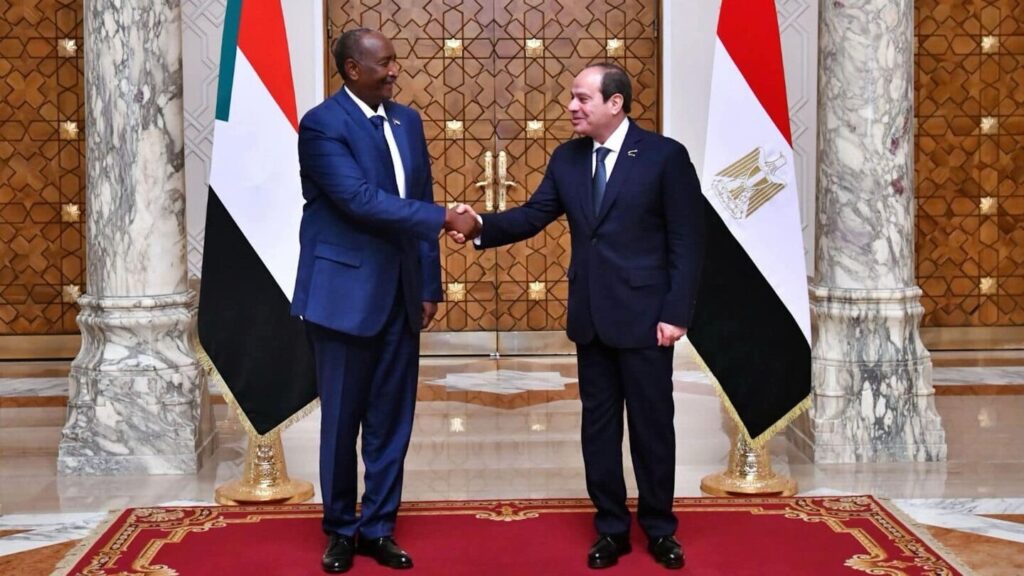
Egypt’s role is no longer confined to providing political support to the Sudanese army, nor is its relationship with Abdel Fattah al-Burhan’s authority managed solely through official meetings and diplomatic coordination. Evidence gathered by this investigation shows that Cairo has gradually moved towards a direct military and logistical role aimed at consolidating al-Burhan’s authority, strengthening the capabilities of the Sudanese Armed Forces, securing its supply lines, and expanding its capacity to sustain the war.
The findings show that this support has taken multiple, interconnected forms. According to reports and military sources, Egypt has provided the Sudanese army with weapons, training, intelligence, and operational guidance. It has also facilitated the movement of military equipment across Sudan’s northern border and helped establish military coordination arrangements that included joint operations rooms, early-warning systems, and mechanisms for coordinating troop deployments and managing movements on the battlefield.
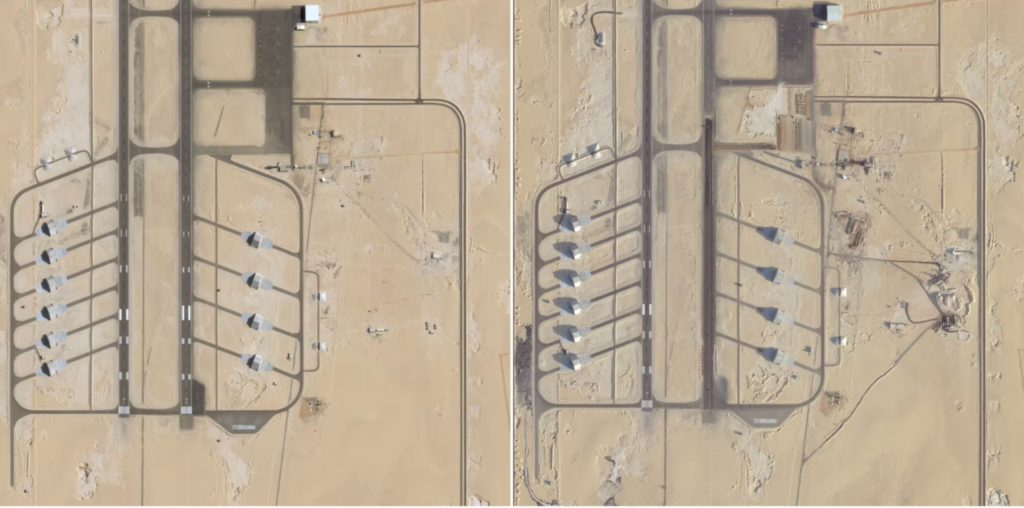
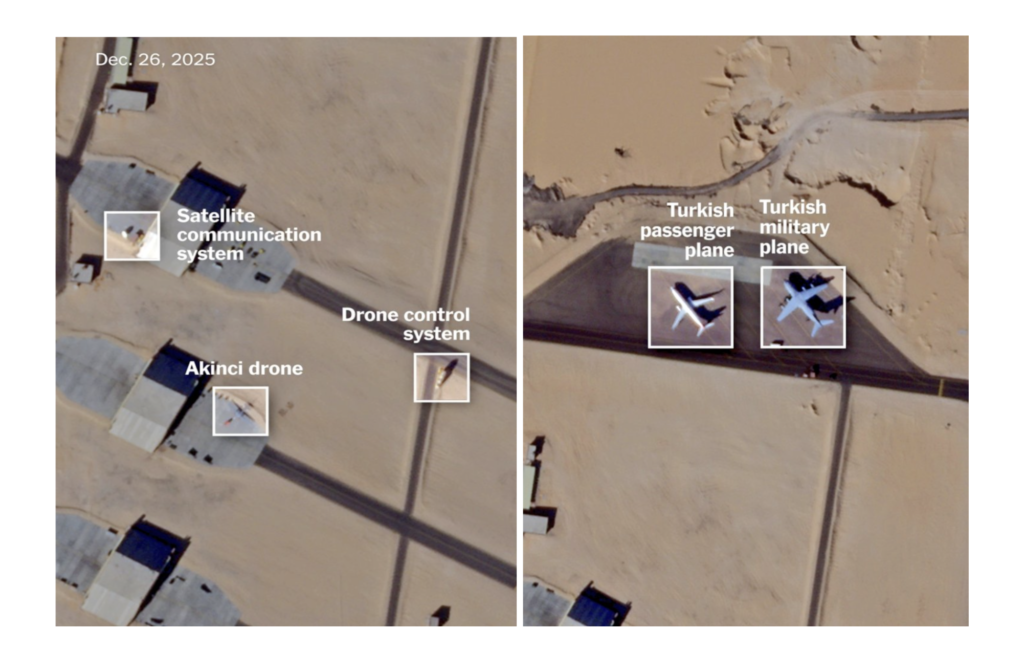
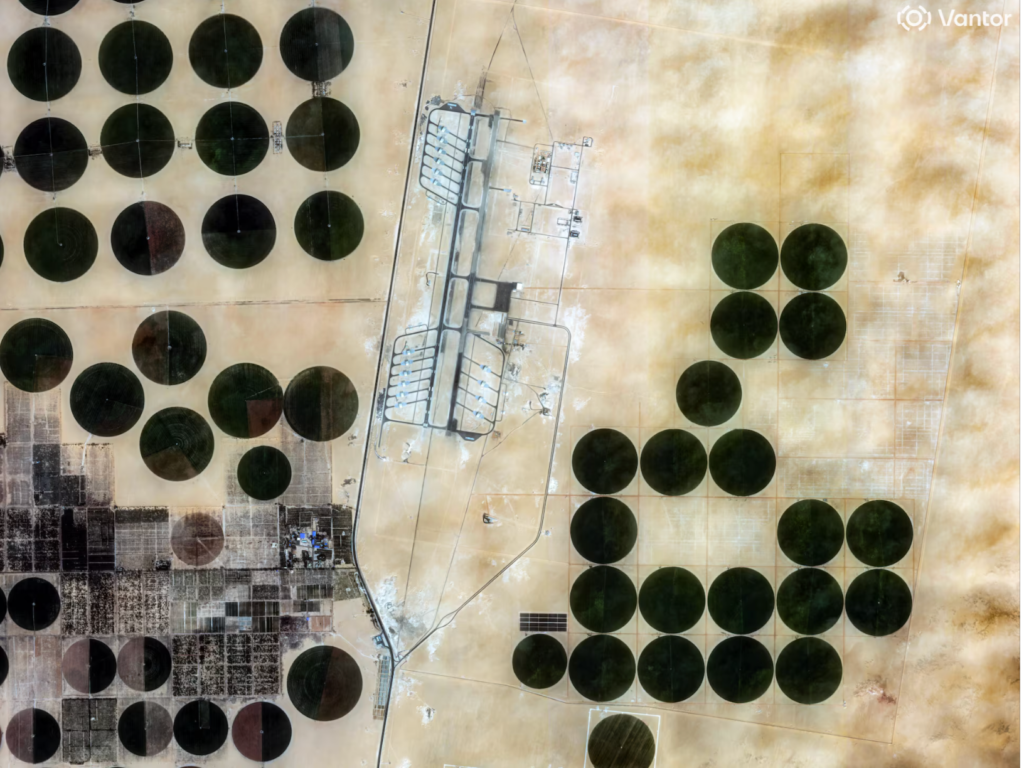
Satellite imagery and flight-tracking data also reveal an expansion of military activity at Egypt’s East Oweinat airbase, including the appearance of Bayraktar Akıncı combat drones, alongside repeated cargo flights linking Cairo International Airport with Port Sudan. Flight-tracking data alone does not disclose the nature of the cargo, but it documents the establishment of a direct and recurring air corridor between Egypt and the Sudanese army’s de facto command centre at a time when Cairo was expanding its military and security support for al-Burhan’s authority.
Egypt’s intervention intensified after the Rapid Support Forces (RSF) made significant advances in Darfur and the tri-border area linking Sudan, Egypt, and Libya—developments that Cairo viewed as a direct threat to its border security and regional interests. From that point onward, Egypt no longer remained a distant observer of the conflict. Instead, it redefined the scope of its involvement by reinforcing its military presence in the south, expanding its air capabilities near the Sudanese border, and tying the security of its frontier to the Sudanese army’s ability to retake lost territory.
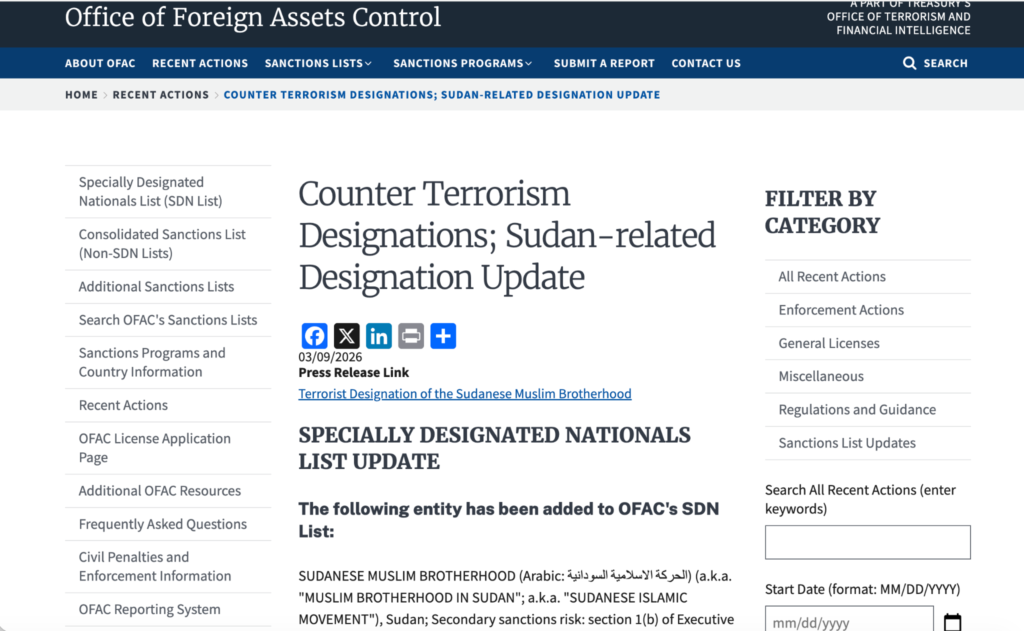
Yet the primary beneficiary of this support network was not the regular army alone. The Sudanese Armed Forces lead a broader military coalition that includes armed movements and Islamist militias, most notably the Al-Baraa ibn Malik Battalion. Fighting alongside the army, the battalion benefits from its air cover, supply lines, intelligence capabilities, and battlefield gains. Following the battalion’s designation by the United States as a Foreign Terrorist Organization, Egypt’s support for the Sudanese army raises a broader and more consequential question: how did Cairo continue backing a military structure that incorporates, and relies on, a U.S.-designated terrorist group in prosecuting the war?
The available evidence does not establish that Egypt directly armed the Al-Baraa ibn Malik Battalion. It does, however, show that Cairo supported the Sudanese army fighting alongside it—an army that provides the battalion with operational cover, resources, and the military environment in which it operates. Rather than tracing support to an isolated military institution, this investigation documents a broader system of military, logistical, and intelligence assistance that strengthened the Sudanese Armed Forces, reinforced the armed coalition surrounding them, and increased its capacity to sustain and prolong the conflict.
East Oweinat: A Border Airbase Reflecting Egypt’s Deepening Military Involvement
Egypt’s role has evolved beyond political backing and military coordination with the Sudanese army’s leadership. It now extends to the development of advanced military infrastructure near the Sudanese border, reflecting a significant escalation in Cairo’s involvement in the conflict.
High-resolution satellite imagery published by The New York Times and analysed by Reuters revealed increased military activity at Egypt’s East Oweinat Air Base in the country’s southwest, only a few dozen kilometres from the Sudanese border. The imagery showed a noticeable expansion of the base’s infrastructure, including additional ground-support equipment, operational facilities, and the presence of advanced Bayraktar Akıncı combat drones.
Three military experts consulted by Reuters independently confirmed that the aircraft visible in the imagery was indeed a Bayraktar Akıncı drone, matching its airframe and design against reference images of the platform. Their assessment provided the first independent confirmation that this class of unmanned combat aircraft was operating from the Egyptian airbase.
The Bayraktar Akıncı is among the most advanced unmanned combat aerial vehicles in Türkiye’s arsenal. It is capable of conducting long-range intelligence, surveillance, and reconnaissance missions, remaining airborne for extended periods, and carrying precision-guided munitions for strikes against ground targets, giving it the ability to project military force over considerable distances.
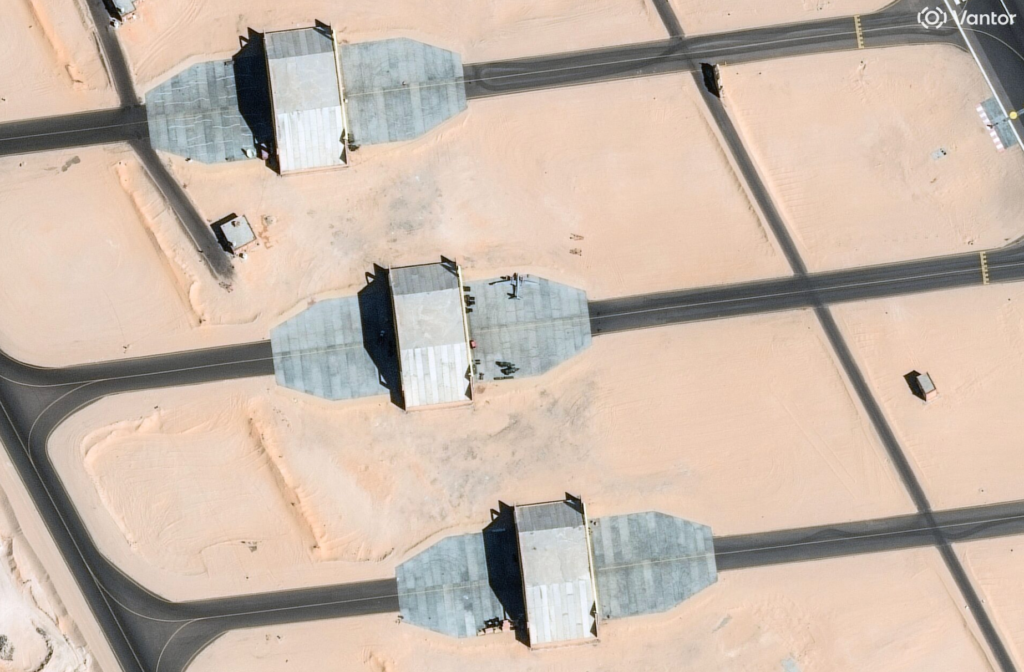
Three military experts and two retired officers told this investigation that these drones were used to conduct strikes inside Sudan, operating from the Egyptian airbase located in close proximity to the theatre of operations. If accurate, their assessments point to an expansion of military cooperation between Cairo and the Sudanese Armed Forces, aimed at strengthening Egypt’s support for al-Burhan’s leadership, the Sudanese army, and the broader military coalition fighting alongside it, which includes the U.S.-designated Foreign Terrorist Organization, the Al-Baraa ibn Malik Battalion.
East Oweinat does not appear to be a conventional border installation. Rather, it forms part of a broader regional support infrastructure. When satellite imagery is examined alongside reports of Egyptian intelligence and logistical assistance to the Sudanese Armed Forces, the establishment of joint operations rooms, and the repeated cargo flights documented between Cairo and Port Sudan, a more coherent picture emerges of Egypt’s expanding role in enhancing the Sudanese army’s military capabilities and securing the supply lines and operational support necessary to sustain its war effort.
The Cairo–Port Sudan Air Bridge: A Supply Corridor Operating Out of Public View
Beyond overland support and operational coordination, flight-tracking data reveals a recurring air bridge linking Cairo International Airport with Port Sudan, the de facto headquarters of the Sudanese Armed Forces since their relocation from Khartoum.
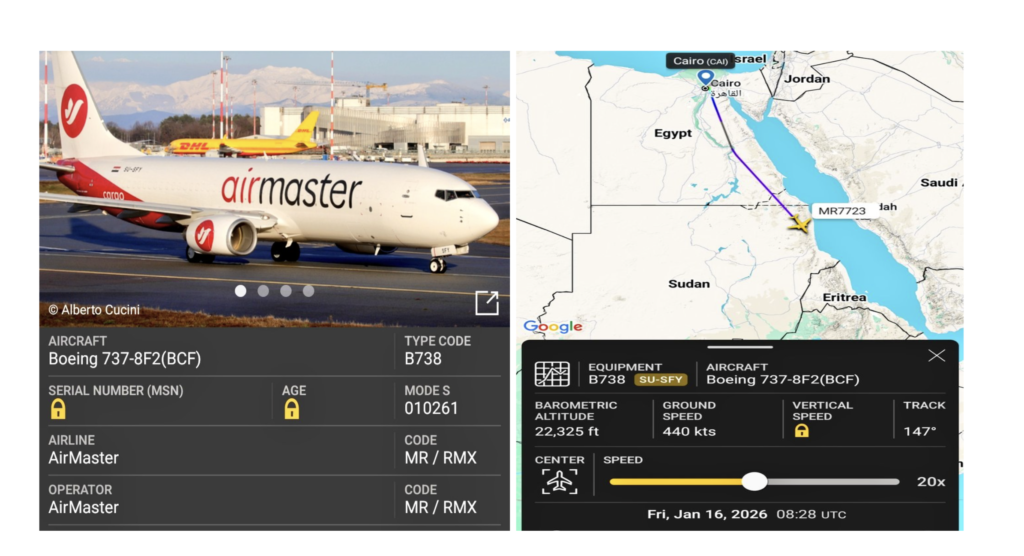
In early 2026, a Boeing 737-8F2 cargo aircraft operated by Egypt’s Air Master, registered SU-SFY and flying under the callsign MR7723, was tracked on a direct flight from Cairo to Port Sudan. The flight was not an isolated event. Similar cargo missions continued in the following months using other aircraft from the same operator, including SU-SAW, which conducted multiple direct flights to Port Sudan under different callsigns. The recurring nature of these flights indicates the operation of a sustained cargo corridor between Egypt and Sudan.
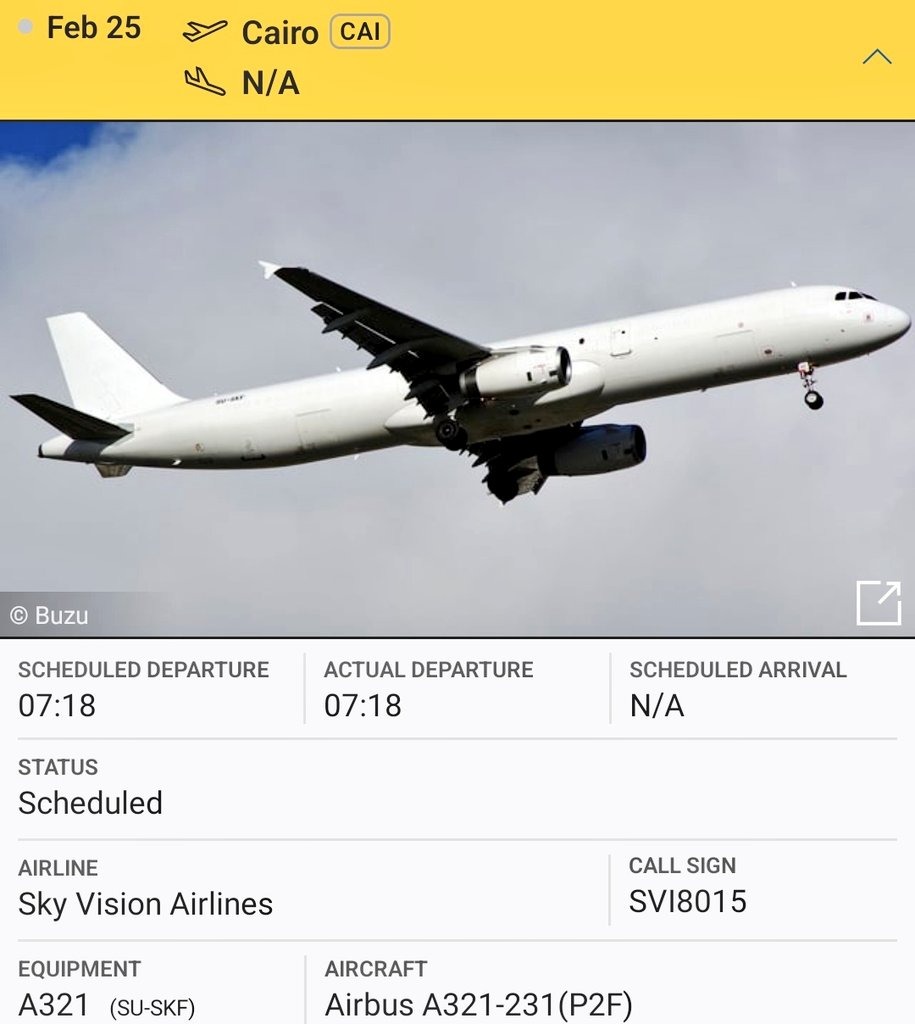
Egypt’s Sky Vision Airlines also operated several direct cargo flights on the same route using Airbus A321-231 freighters, including aircraft registered SU-SKF and SU-SKG, both of which were tracked departing Cairo International Airport for Port Sudan during June 2026—a period that saw a marked increase in the volume of cargo flights arriving in the city.
While flight-tracking data alone cannot establish the contents of these aircraft, it documents the existence of a sustained and expanding air logistics corridor linking Egypt with the Sudanese Armed Forces’ wartime headquarters. Viewed alongside satellite imagery, military reporting, and evidence of broader Egyptian military and intelligence support, the recurring flights reinforce indications of an increasingly organised logistical network supporting the Sudanese army’s operational capabilities.
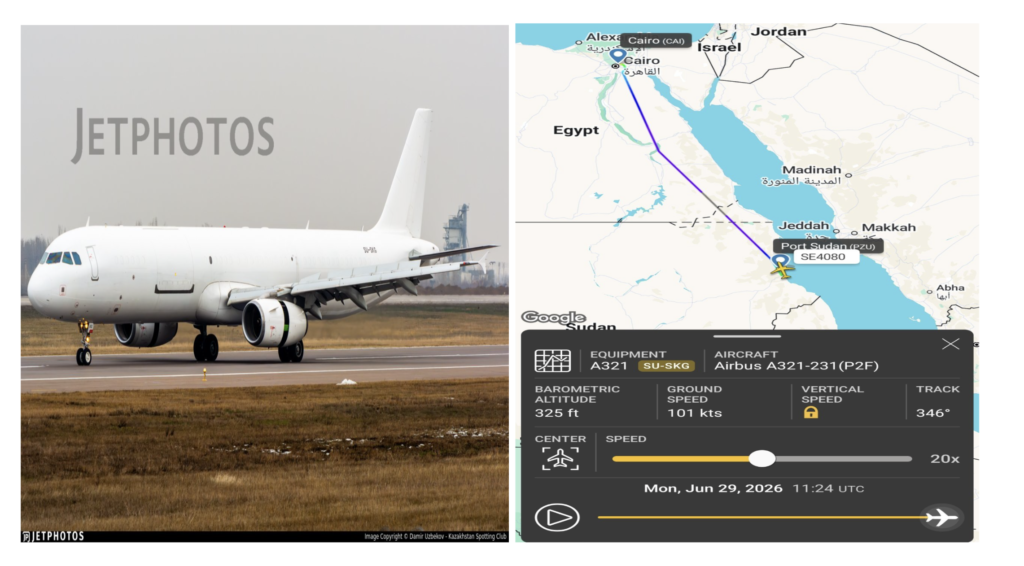
Open-source monitoring data shows that Port Sudan received a series of cargo flights from Egypt during this period, reflecting increased logistical activity directed towards the Sudanese army’s administrative and military centre. Flight-tracking records do not reveal the nature of the cargo or identify the entities that received it, meaning the contents cannot be determined from the routes alone.
However, military air-transport experts note that Boeing 737-8F2 and Airbus A321-231 freighter aircraft are widely used to transport military equipment, ammunition, spare parts, and other high-priority logistical supplies, as well as commercial cargo. Their large payload capacity and ability to operate quickly and efficiently between regional airports make them well suited to such missions.
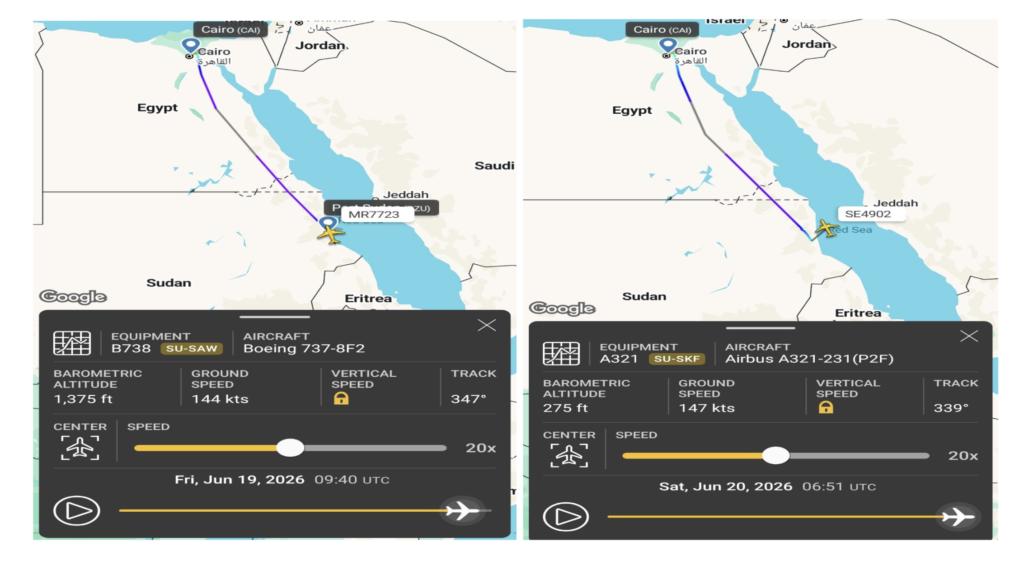
When viewed within this broader context—alongside the Wadi Halfa land corridor, the military expansion at East Oweinat Air Base, and the establishment of joint operations rooms—these flights form part of a more comprehensive picture of the multi-layered support network that sustained the Sudanese Armed Forces during the war. The flights, by themselves, do not prove that weapons or ammunition were transported. They do, however, document the existence of a regular air corridor between Cairo and Port Sudan that coincided with Egypt’s expanding military support for the Sudanese army. As such, they represent a key component in understanding the logistical architecture that enabled the army to maintain the steady flow of supplies to its wartime command centre.
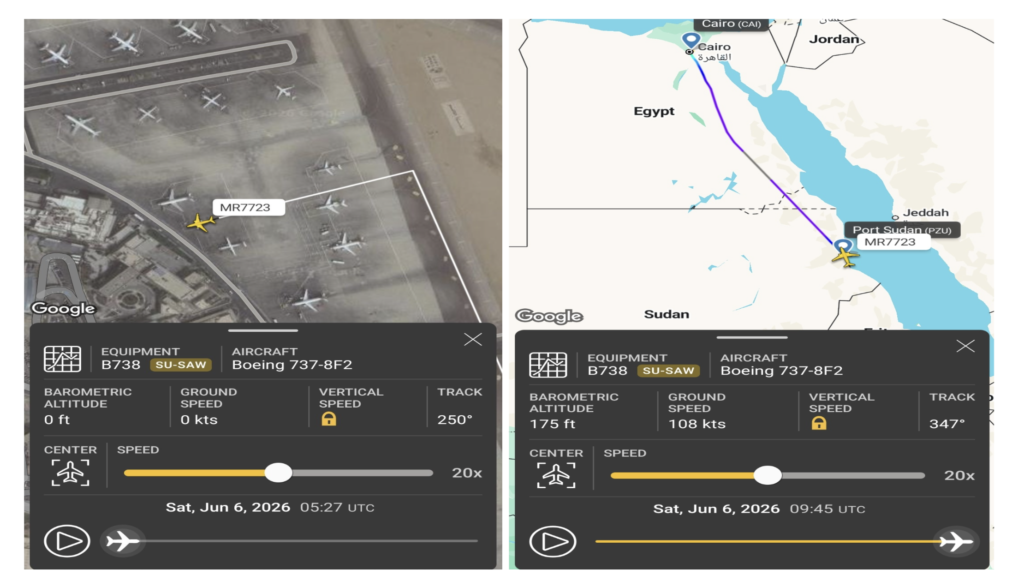
The significance of this air bridge lies not only in the number of flights, but also in its continuity. The route remained active for several months and was served by different Egyptian cargo aircraft at times that coincided with deepening military cooperation between Cairo and al-Burhan’s authority. This pattern suggests that the flights were not isolated commercial movements, but part of a recurring logistical operation that warrants further scrutiny of cargo manifests, ground-handling records, and the entities that received the shipments after their arrival in Port Sudan.
Wadi Halfa: The Overland Gateway for Egyptian Military Support
Egyptian support for the Sudanese Armed Forces was not limited to political coordination or aerial activity. It also extended to the establishment of an overland logistics corridor that played a central role in maintaining the flow of military supplies to the army throughout the war.
Multiple security and military reports indicate that the Wadi Halfa crossing, linking southern Egypt with northern Sudan, became one of the Sudanese army’s most important supply routes for moving military equipment, ammunition, and spare parts into areas under its control. Its location, far from most of the main battlefronts, provided a more stable and less exposed route than supply lines running through western Sudan or via the Red Sea.
According to a report by the European Union Agency for Asylum (EUAA), Egypt provided military support to the Sudanese Armed Forces that included weapons, ammunition, training, and intelligence, while also facilitating the movement of military equipment through the Wadi Halfa crossing to the Sudanese army and allied forces.
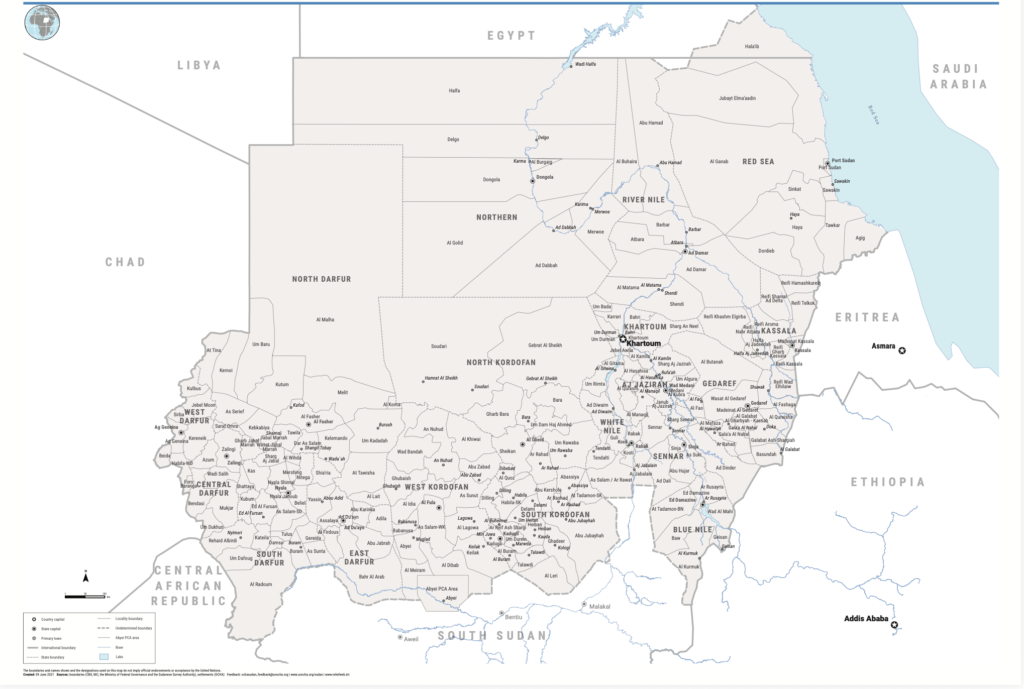
A report by the Belgian Royal Higher Institute for Defence goes further, describing Egypt as one of the Sudanese army’s most significant military backers. It states that Egyptian support included air assistance, training, intelligence-sharing, and the facilitation of weapons and equipment transfers through Wadi Halfa, helping the Sudanese Armed Forces preserve their supply lines during critical stages of the war.
These findings are particularly significant because they suggest that Wadi Halfa was not merely a border crossing serving civilian trade. According to the reports, it became a strategic logistics corridor within the wider support system Cairo established for the Sudanese army.
The importance of this route lies not only in the volume of shipments that may have passed through it, but also in the role it played in ensuring the continuity of supplies to Sudan’s military establishment at a time when large parts of the country’s internal transport network were under the control of the Rapid Support Forces. Through this overland corridor, the army was able to maintain the movement of equipment, ammunition, and spare parts to its military bases and redistribute them among units deployed across northern and central Sudan.
When the role of the Wadi Halfa crossing is examined alongside the military activity at East Oweinat Air Base, it becomes clear that Egyptian support did not rely on a single route. Rather, it operated through a multi-channel support network combining air and overland infrastructure, giving the Sudanese army greater capacity to sustain its military operations and retake some of the territory it had lost during the early stages of the war.
Joint Operations Rooms: Military Coordination Beyond Logistical Support
Egypt’s role extended beyond maintaining supply routes and strengthening the Sudanese army’s military capabilities. According to statements by officials, military sources, and multiple media reports, Cairo also participated in establishing a joint operational coordination structure designed to support the Sudanese Armed Forces in their campaign against the Rapid Support Forces.
Available information indicates that Egypt and the Sudanese military established joint operations rooms to coordinate troop movements, monitor battlefield developments, exchange intelligence, and plan military operations across multiple fronts. The arrangement reflected a level of security and military cooperation unprecedented since the outbreak of the conflict.
According to Egyptian military sources cited by international media, this cooperation went beyond intelligence sharing. It reportedly included operational guidance, coordination of troop deployments, and support for military plans aimed at recapturing territory in Kordofan and Darfur, after Cairo came to view the Rapid Support Forces’ advance towards the Egyptian border as a direct threat to its national security.
The sources also described efforts to establish early-warning systems and radar capabilities to strengthen the monitoring of military movements across northern Sudan and integrate them with the joint operations rooms. Such arrangements would enable the real-time exchange of information and improve the Sudanese army’s ability to respond rapidly to developments on the battlefield.
Taken together, these measures point to more than conventional military cooperation between two neighbouring states. They suggest the development of a command-and-control framework intended to enhance the Sudanese Armed Forces’ ability to manage operations, reorganise troop deployments, and improve coordination among units operating across multiple fronts.
These developments are particularly significant because they coincided with other forms of Egyptian support, including intelligence-sharing, military training, overland supply routes, and expanded military activity at East Oweinat Air Base. Viewed collectively, they indicate that Egypt’s support did not consist of isolated initiatives but rather formed part of an integrated military and logistical support network that strengthened the Sudanese army’s operational capabilities throughout the conflict.
Nor does this cooperation appear to have been detached from Cairo’s broader strategic objectives. As the Rapid Support Forces expanded their influence across western Sudan and advanced towards the tri-border area linking Sudan, Egypt, and Libya, Egypt appears to have shifted from monitoring the conflict to helping establish command-and-control mechanisms aimed at preventing the collapse of the Sudanese Armed Forces, preserving their cohesion, and enhancing their ability to regain the initiative on the battlefield.
As a result, Egypt’s role extended beyond supporting the Sudanese army from outside the theatre of operations. According to the available reporting and source accounts, it also contributed to strengthening the army’s command structure and operational capacity by providing the coordination and military planning mechanisms that supported its performance during one of the most critical phases of the war.
The Sudanese Army: A Military Coalition Incorporating Designated Armed Groups
Developments during the conflict indicate that the Sudanese Armed Forces no longer relied solely on their regular units. Instead, they restructured their fighting force around a broad coalition comprising armed movements, local militias, Islamist formations, and tribal forces, all of which became integrated into military operations conducted by the army across multiple fronts.
As the war expanded and the Sudanese army suffered significant losses during its early stages, military commanders increasingly incorporated these formations into operational planning, assigning them combat and security responsibilities that included participation in ground offensives, securing urban areas, protecting supply lines, manning checkpoints, and taking part in operations following the recapture of territory from the Rapid Support Forces.
According to United Nations and other international reporting, this coalition includes several armed movements that are signatories to the Juba Peace Agreement, alongside the Sudan Shield Forces, the Popular Resistance Forces, elements of Sudan’s former security apparatus, and Islamist armed groups. Among the most prominent is the Al-Baraa ibn Malik Battalion, whose role has expanded significantly since the outbreak of the war and which has been designated by the United States as a Foreign Terrorist Organization.
These formations did not remain auxiliary forces operating alongside the Sudanese Armed Forces. Over the course of the conflict, they became increasingly involved in operational planning, combat execution, and territorial control, making the distinction between the regular army and its allied armed groups progressively more difficult to sustain.
As a result, military, logistical, or intelligence support provided to the Sudanese Armed Forces does not benefit regular army units alone. It also strengthens the operational capacity of the broader military coalition, whose constituent forces operate within a unified command structure while relying on the same logistical infrastructure, supply networks, and shared air and intelligence support.
These dynamics have become increasingly significant as the Sudanese army has relied more heavily on some of these formations in its most complex military operations. A growing number of analysts therefore argue that the conflict is no longer being fought by the regular army alone, but by a broad military coalition that has become the principal fighting force underpinning Abdel Fattah al-Burhan’s authority.
This evolution also raises broader legal and policy questions regarding the responsibilities of states providing military, logistical, or intelligence assistance to the Sudanese Armed Forces at a time when those forces are operating in close coordination with armed groups that differ in their legal status, human rights records, and relationship with the formal military establishment.
Al-Baraa ibn Malik Battalion: Egyptian Support Strengthened a Coalition That Includes a Designated Terrorist Organization
The impact of Egypt’s support extended beyond enhancing the capabilities of the Sudanese Armed Forces themselves. It also reinforced the broader military coalition led by the army, which includes armed formations that have played a central role in military operations since the outbreak of the conflict, most notably the Al-Baraa ibn Malik Battalion.
During the war, the battalion emerged as one of the Sudanese army’s most active allied formations, participating in major battles in Khartoum, Al Jazirah, Sennar, and Kordofan. Its fighters have repeatedly appeared alongside army units in ground offensives, urban security operations, checkpoint management, and deployments in areas recaptured by the Sudanese Armed Forces.
On 16 March 2026, the United States designated the Al-Baraa ibn Malik Battalion as a Foreign Terrorist Organization (FTO), accusing it of committing serious abuses against civilians, carrying out extrajudicial executions, obstructing political settlement efforts, and maintaining links through which some of its members received training and support from Iran’s Islamic Revolutionary Guard Corps, according to the U.S. Department of State.
Despite this designation, the Sudanese Armed Forces continued to rely on the battalion as an integral component of their military coalition. No public steps were announced to remove the group from military operations or terminate its participation in combat. Instead, its fighters continued to appear in operations led by the Sudanese army, benefiting from the shared command structure, logistical infrastructure, and operational support provided by the armed forces.
Against this backdrop, Egypt’s support for the Sudanese Armed Forces takes on a broader significance. Military, logistical, and intelligence assistance provided to the army no longer benefits only its regular units. It also enhances the capabilities of the wider military coalition fighting under the army’s command, operating within the same command-and-control structure and relying on the same supply networks, air support, and intelligence resources.
The evidence reviewed by this investigation does not establish that Egypt directly supplied weapons or training to the Al-Baraa ibn Malik Battalion. It does, however, show that Cairo supported the Sudanese Armed Forces, helped sustain their operational capabilities, and reinforced a military structure within which the battalion operates and from which it benefits. As a result, the practical effects of that support extended beyond the regular military institution to the armed formations on which it increasingly relied to prosecute the war.
This reality raises growing legal and policy questions regarding the responsibilities of states that continue to provide military and logistical assistance to regular armed forces operating in close coordination with a designated terrorist organization, without measures to prevent that organization from benefiting from the capabilities and resources such assistance provides.
The significance of these questions extends beyond legal considerations alone. They bear directly on the trajectory of the conflict itself. As the military capabilities of the Sudanese Armed Forces were strengthened, so too were those of the broader coalition fighting under their command, including the armed formations operating within it. In turn, this contributed to prolonging the conflict, complicating prospects for a political settlement, and increasing the humanitarian cost borne by Sudanese civilians.
Why Did Cairo Continue to Support the War?
The available evidence suggests that Egypt’s involvement in supporting the Sudanese Armed Forces was driven less by a desire to preserve stability in Sudan or advance a political settlement than by its own security and strategic priorities. The findings indicate that Cairo placed these interests at the forefront of its policy, even as the conflict became increasingly protracted and the humanitarian crisis deepened.
From the outset of the war, Egypt appears to have viewed the survival of the Sudanese Armed Forces under the leadership of Abdel Fattah al-Burhan as central to safeguarding its regional influence and maintaining a friendly military authority along its southern border. Such an outcome aligned with Cairo’s broader interests in border security, the Grand Ethiopian Renaissance Dam (GERD) dispute, and the strategic balance of power in the Red Sea.
The evidence examined in this investigation indicates that Egypt went beyond publicly expressing political support for the Sudanese army. It mobilised military, logistical, and intelligence channels to strengthen the army’s position in the conflict. From the expansion of military activity at East Oweinat Air Base, to the Wadi Halfa overland corridor, the establishment of joint operations rooms, and the recurring air bridge to Port Sudan, Egypt developed an integrated support network that enhanced the Sudanese army’s ability to sustain its military operations.
Nor do these actions appear detached from Cairo’s broader geopolitical calculations. Preserving al-Burhan’s authority provides Egypt with a friendly military partner along its southern border, helps sustain its influence within Sudan’s state institutions, and reduces the likelihood that a new leadership could realign the country’s regional alliances in ways that challenge Egyptian interests—whether in relation to the Nile waters, Red Sea security, or the balance of power in the Horn of Africa.
This strategy, however, came at a significant cost. Rather than contributing to an end to the conflict, it strengthened one of the warring parties militarily, prolonged the fighting, and reinforced the Sudanese army’s reliance on a military solution at a time when civilians continued to bear the greatest burden of the war.
Moreover, the impact of Cairo’s support was not confined to the regular armed forces. It also extended to the broader military coalition led by the Sudanese Armed Forces, which includes armed groups such as the Al-Baraa ibn Malik Battalion, designated by the United States as a Foreign Terrorist Organization. In practical terms, Egypt was no longer supporting an isolated military institution but reinforcing a fighting coalition within which armed actors accused of serious abuses against civilians continued to operate.
Taken together, the evidence reviewed in this investigation suggests that Cairo chose to prioritise its strategic interests over the mounting costs of the war. It continued to strengthen the Sudanese Armed Forces despite the expansion of the conflict, the growing number of documented abuses, and the incorporation of a U.S.-designated terrorist organization into the military coalition fighting under the army’s command. In doing so, Egypt’s support contributed to reinforcing the existing military balance of power and prolonging the conflict rather than advancing the prospects for a comprehensive political settlement.